
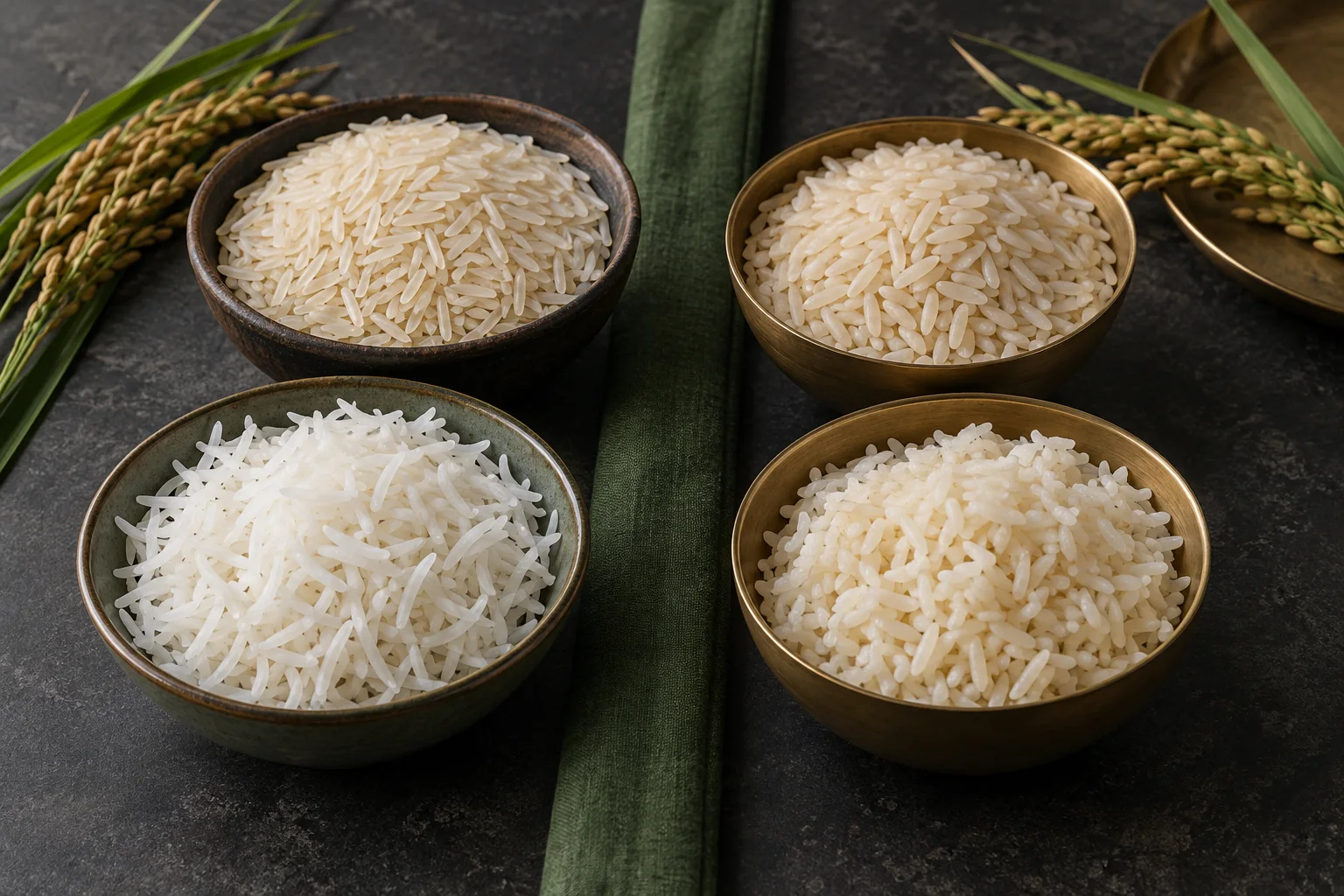
Sugandha vs Sharbati Rice: Differences, Uses and Buyer Tips
Compare Sugandha and Sharbati rice by grain appearance, aroma, cooking behaviour, price position and commercial applications.
Sugandha and Sharbati are long-grain rice choices used in value-focused retail and food service. They are sometimes presented beside Basmati products, but buyers should not assume that every aromatic or long grain is Basmati.
The practical choice depends on grain appearance, aroma expectation, cooking tolerance and target shelf price.
Quick answer
Sugandha is often chosen when buyers want a longer aromatic-style presentation, while Sharbati commonly serves dependable everyday value. Confirm the exact commercial grade through samples.
Key points at a glance
- Keep Basmati and non-Basmati labelling clear.
- Compare matching processing forms.
- Check cooked yield and texture.
- Set realistic aroma and length claims.
How the market positions them
Sugandha is commonly marketed as a long-grain aromatic option for buyers seeking an accessible step below premium Basmati. Sharbati is widely used in everyday value segments. Supplier descriptions vary, so the written specification matters more than a sales nickname.
Cooking behaviour
Steam versions can support clean separation, while Sella versions offer firmer grains for large batches. Test water absorption, cooked length, stickiness and holding time. Use the water-ratio guide as a controlled starting method, then adjust for the sample.
Best-fit applications
Sugandha can suit value biryani, catering and retail lines where consumers want a longer aromatic-style grain. Sharbati can suit daily meals, institutional cooking and price-sensitive retail. The exact fit changes by grade and local preference.
Avoid confusing product claims
Do not label rice as Basmati merely because it is long or fragrant. Use the correct variety and category on packs, quotations and customs documents. Our Basmati versus non-Basmati guide explains the distinction.
A simple decision checklist
- Define legal product name.
- Choose form and grade.
- Measure raw and cooked performance.
- Check consistency across the sample.
- Match pack claims to verified facts.
Frequently asked questions
Are Sugandha and Sharbati Basmati?
They are generally traded as separate long-grain categories; use the official product identity applicable to the lot.
Which is better for catering?
The form and grade matter. Sella or Steam samples should be tested under the actual batch method.
Can they replace premium Basmati?
They can serve value segments, but customer expectations for aroma and presentation may differ.
Final takeaway
Sugandha and Sharbati work best when positioned honestly. Let the sample, cooking economics and local customer expectation determine the choice.
For a quotation, sample or specification discussion, review Surya Foods products, our quality-control process, and global export support, then contact our team.