
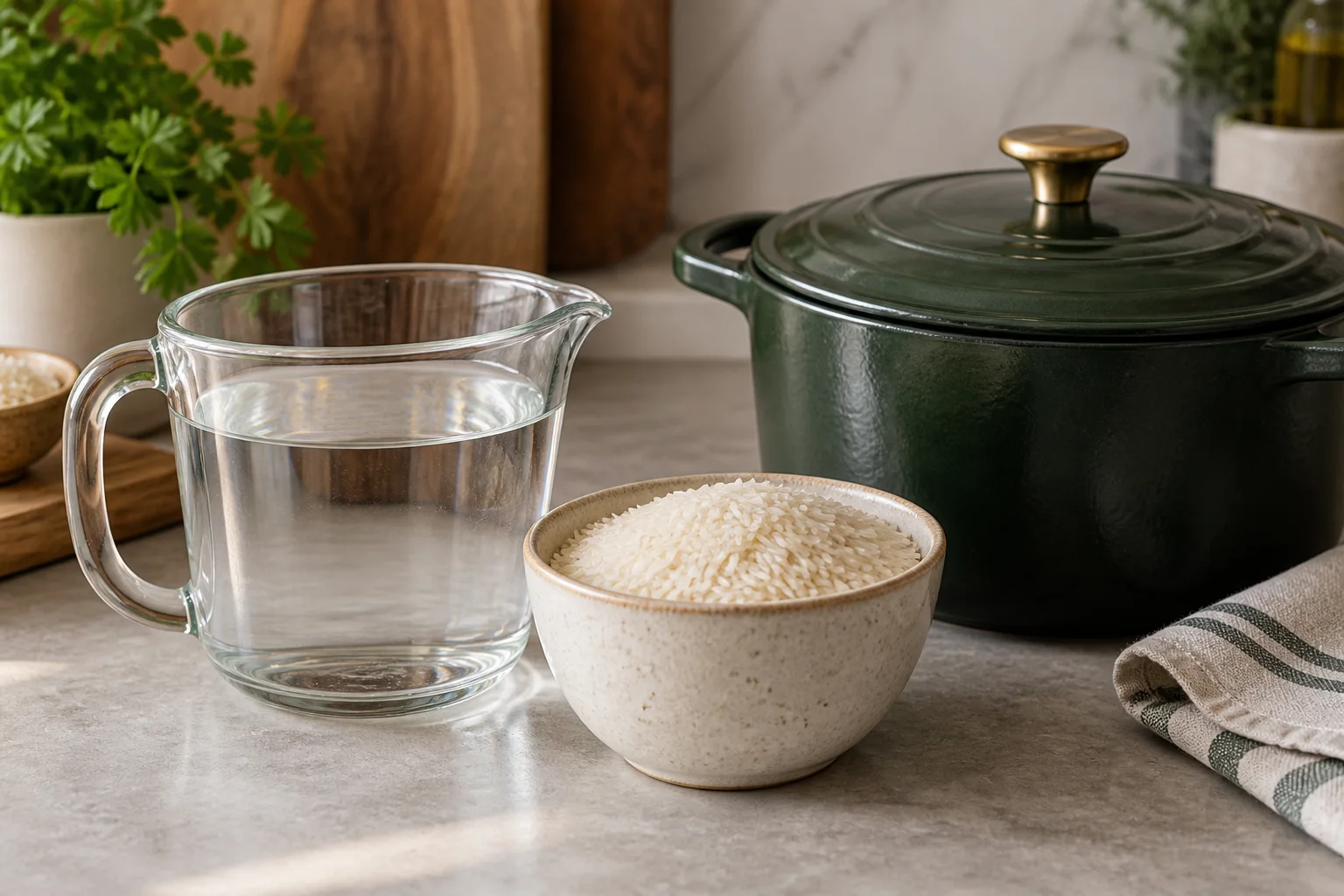
Basmati Rice Water Ratio: Pot, Absorption and Rice Cooker
Use practical starting water ratios for Basmati rice and learn how rinsing, soaking, ageing and processing change the result.
There is no single water ratio that works for every Basmati rice. Aged rice, new crop, Raw, Steam and Sella each absorb water differently. Your pot, heat and soaking time also change how much water remains available.
Use a ratio as a starting point, then adjust one small step at a time.
Quick answer
For rinsed and soaked white Basmati using absorption, begin around 1 cup rice to 1.25 cups water. Unsoaked or older rice may need more; parboiled Sella often needs a different method and longer cooking.
Key points at a glance
- Measure rice and water with the same cup.
- Drain soaked rice well.
- Use a tight lid and low heat.
- Rest before fluffing.
Why ratios vary
Rice already contains moisture. New crop may need less added water, while well-aged rice often accepts more. Rinsing removes surface starch; soaking begins hydration before heat starts. A loose lid also lets more steam escape.
Absorption method
Rinse until the water is mostly clear, soak if desired and drain. Start with about 1:1.25 for soaked white Basmati. Bring to a gentle boil, cover, lower the heat and avoid opening the lid. Rest ten minutes after cooking. If the centre is hard, add a little more water next time; if soft, reduce it.
Rice cooker method
Use the cooker’s cup and level lines when available. For a new sample, begin near the absorption ratio and note the result. Keep-warm time can dry the surface or soften the base, so include holding time in your test.
Open-pot and Sella cooking
Many biryani kitchens cook rice in excess water and drain it at the desired stage. Here, timing matters more than a fixed ratio. Sella rice may benefit from longer soaking and boiling. Read the processing comparison first.
A simple decision checklist
- Identify form and crop age.
- Rinse and drain consistently.
- Record starting ratio.
- Keep heat and pot constant.
- Change water in small increments.
Frequently asked questions
Is 1:2 too much water?
For many soaked white Basmati samples in absorption cooking it may be too much, but equipment and rice vary.
Does soaking reduce water?
Yes, soaked grains already contain some absorbed water.
Why is my rice wet at the bottom?
Too much water, high heat changes or insufficient resting can contribute.
Final takeaway
A reliable ratio comes from one measured test and a small adjustment. Record your method so the good result is repeatable.
For a quotation, sample or specification discussion, review Surya Foods products, our quality-control process, and global export support, then contact our team.