
1121 vs 1509 Basmati Rice: Which One Should You Buy?
Understand the difference between 1121 and 1509 Basmati rice for biryani, retail, catering and bulk import programmes.
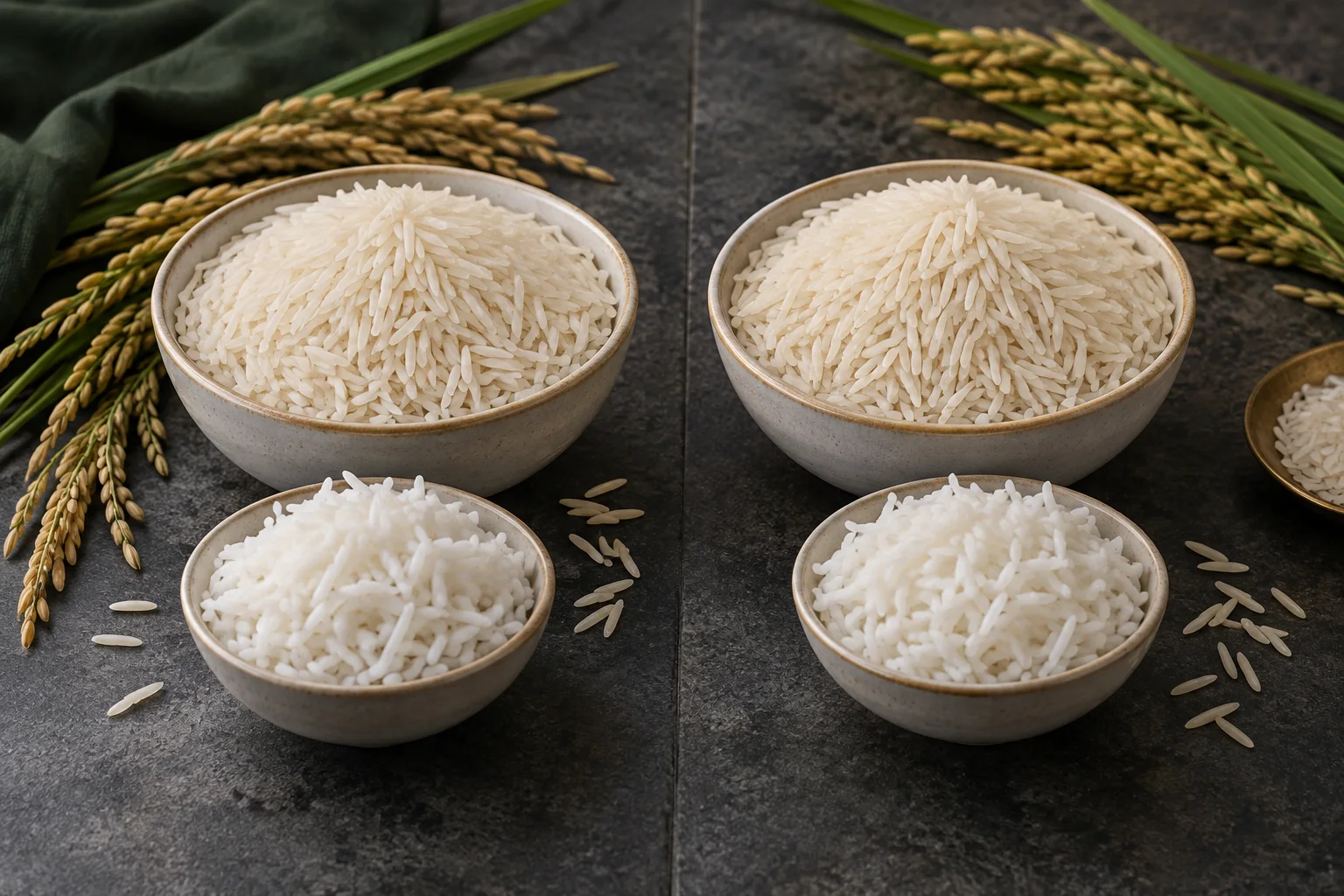
1121 and 1509 are popular when buyers want a long, elegant Basmati grain. The usual market description places 1121 at a premium position and 1509 as a strong quality-to-price option, but that shortcut should never replace a sample test.
The better choice depends on the result your customer notices: raw grain appearance, cooked elongation, aroma, firmness, consistency and final menu cost.
Quick answer
Start with 1121 for a top premium brief and 1509 for extra-long presentation with competitive value. Then verify the exact lots under identical cooking conditions.
Key points at a glance
- 1121 is widely recognised in premium export channels.
- 1509 is early-maturing and often competitively positioned.
- Both are available in Raw, Steam and Sella forms.
- Ageing and milling can change the result substantially.
The main commercial difference
1121 is strongly associated with premium extra-long Basmati and dramatic cooked length. 1509 also offers a slender grain and attractive elongation, commonly at a value-led position. Actual pricing moves with crop supply, ageing, processing and freight.
Do not advertise a fixed grain length unless your shipment specification supports it.
Choose by dish, not by reputation
For a premium biryani pack, customers may reward exceptional cooked presentation. For catering, consistent separation and portion yield can matter more. Run the best Basmati for biryani test with the recipe your customer uses.
A well-processed 1509 lot can outperform a poorly matched 1121 lot in a specific kitchen.
Compare matching processing forms
Raw rice tends to cook softer, Steam rice offers dependable separation, and Sella rice is firmer for bulk cooking. Comparing 1121 Raw with 1509 Golden Sella confuses variety with processing.
Our Raw, Steam and Sella guide separates these two decisions.
Build a useful purchase specification
State variety, form, crop year, ageing, average grain length, purity, broken percentage, moisture, colour, packing and residue requirements. Add an approved sample and testing method.
This creates one shared definition of quality for buyer, mill, laboratory and inspection company.
A simple decision checklist
- Define premium or value-premium position.
- Select the processing form.
- Blind-test both samples.
- Compare cooking yield and holding quality.
- Lock the approved result into the contract.
Frequently asked questions
Is 1121 always more expensive?
Often, but not always. Crop, form, age, grade and freight can change the quotation.
Is 1509 genuine Basmati?
Yes, Pusa Basmati 1509 is a notified Basmati variety.
Which looks longer after cooking?
Both can elongate strongly; measure the actual approved lots rather than relying on a general promise.
Final takeaway
Use 1121 when the brief rewards premium recognition and use 1509 when value with extra-long appeal leads. In both cases, the sample and specification decide the purchase.
For a quotation, sample or specification discussion, review Surya Foods products, our quality-control process, and global export support, then contact our team.