
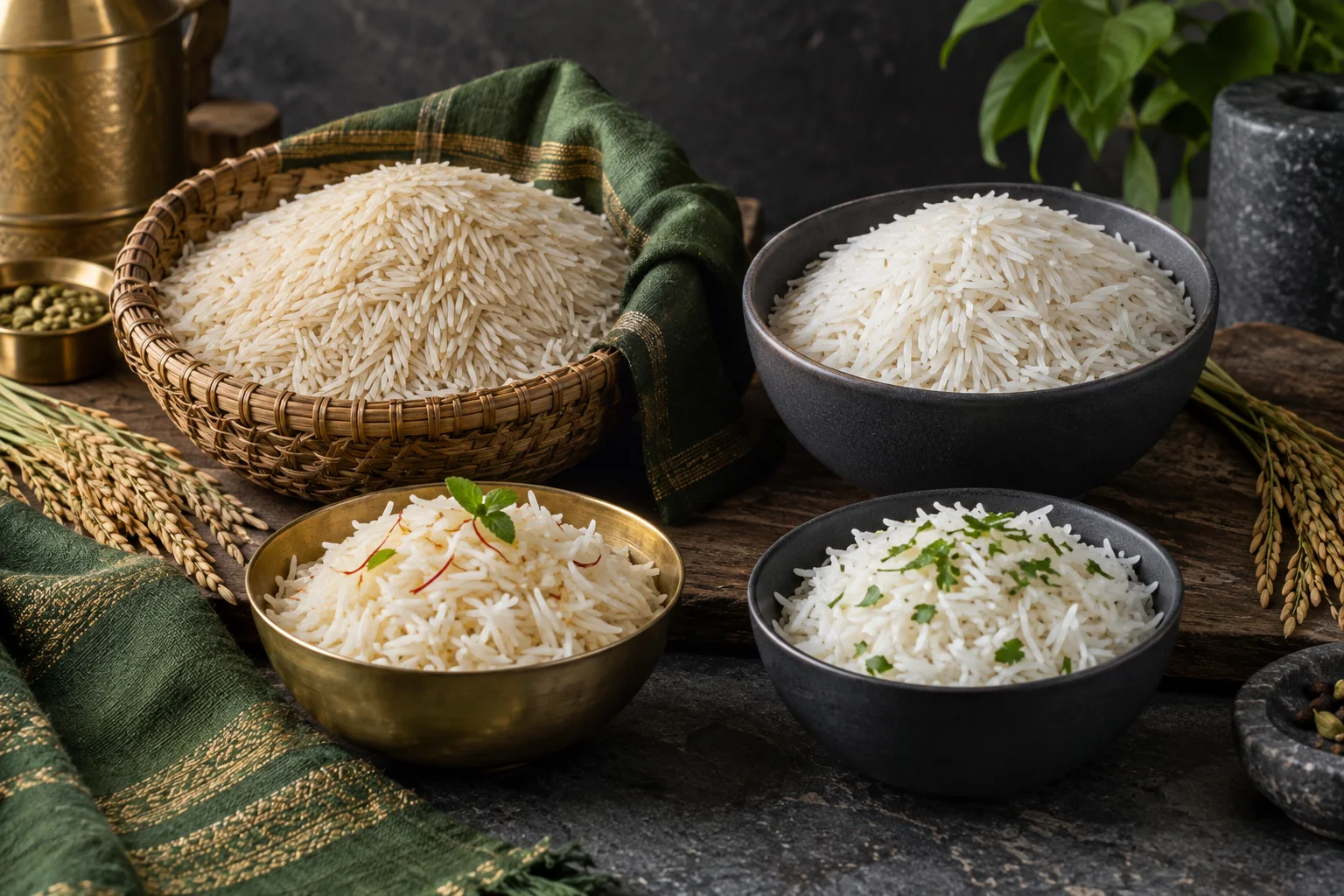
Traditional Basmati vs 1121: Aroma, Length and Best Uses
Compare Traditional Basmati and Pusa 1121 by aroma, grain length, cooking style, market positioning and ideal dishes.
Traditional Basmati and Pusa 1121 can both be premium, but they create different kinds of value. Traditional selections are often chosen for heritage aroma and flavour, while 1121 is famous for extra-long visual presentation.
Neither is automatically better. The right choice depends on what the customer wants to smell, see, eat and pay for.
Quick answer
Choose Traditional Basmati when heritage aroma and flavour lead the brief. Choose 1121 when extra-long cooked presentation and modern premium recognition matter most.
Key points at a glance
- Traditional Basmati is aroma-led.
- 1121 is strongly presentation-led.
- Ageing matters for both.
- Purity and lot consistency should be verified.
Aroma versus visual impact
Traditional Basmati is valued for a characteristic fragrance and eating quality connected with established regional types. 1121 built its reputation around very long, slender grains and exceptional elongation.
A restaurant may prefer one for a deeply aromatic pilaf and the other for a biryani where every long grain is visible.
Why ageing changes the experience
Controlled ageing reduces grain moisture and can support firmer, more separate cooking while aroma develops. Poor storage can cause the opposite: stale odour, insects or uneven moisture.
Read the aged versus new-crop guide before using age as a simple quality claim.
How to compare fairly
Buy matching processing forms and prepare both with the same recipe. Smell the dry sample, the cooking steam and the rested rice. Measure cooked length, but also score texture, flavour, separation and suitability for the final dish.
Invite kitchen users into the decision rather than relying only on the procurement team.
Positioning the product
1121 often supports luxury retail, banquet and gifting lines built around visual length. Traditional Basmati can support a heritage story for customers who recognise its aroma and flavour.
Use truthful pack language. A strong origin story should still be backed by traceability, testing and an approved sample.
A simple decision checklist
- Identify the customer’s main quality cue.
- Compare the same form and age.
- Score aroma separately from length.
- Test the final recipe.
- Verify purity before making pack claims.
Frequently asked questions
Which has the stronger aroma?
Traditional Basmati is commonly selected for aroma, but actual intensity varies by lot and storage.
Which is longer?
1121 is generally selected for extra-long visual presentation.
Can both be premium?
Yes. They express premium quality in different ways.
Final takeaway
Traditional Basmati sells a heritage aroma experience; 1121 sells dramatic modern presentation. Let your customer’s preferred experience guide the specification.
For a quotation, sample or specification discussion, review Surya Foods products, our quality-control process, and global export support, then contact our team.