
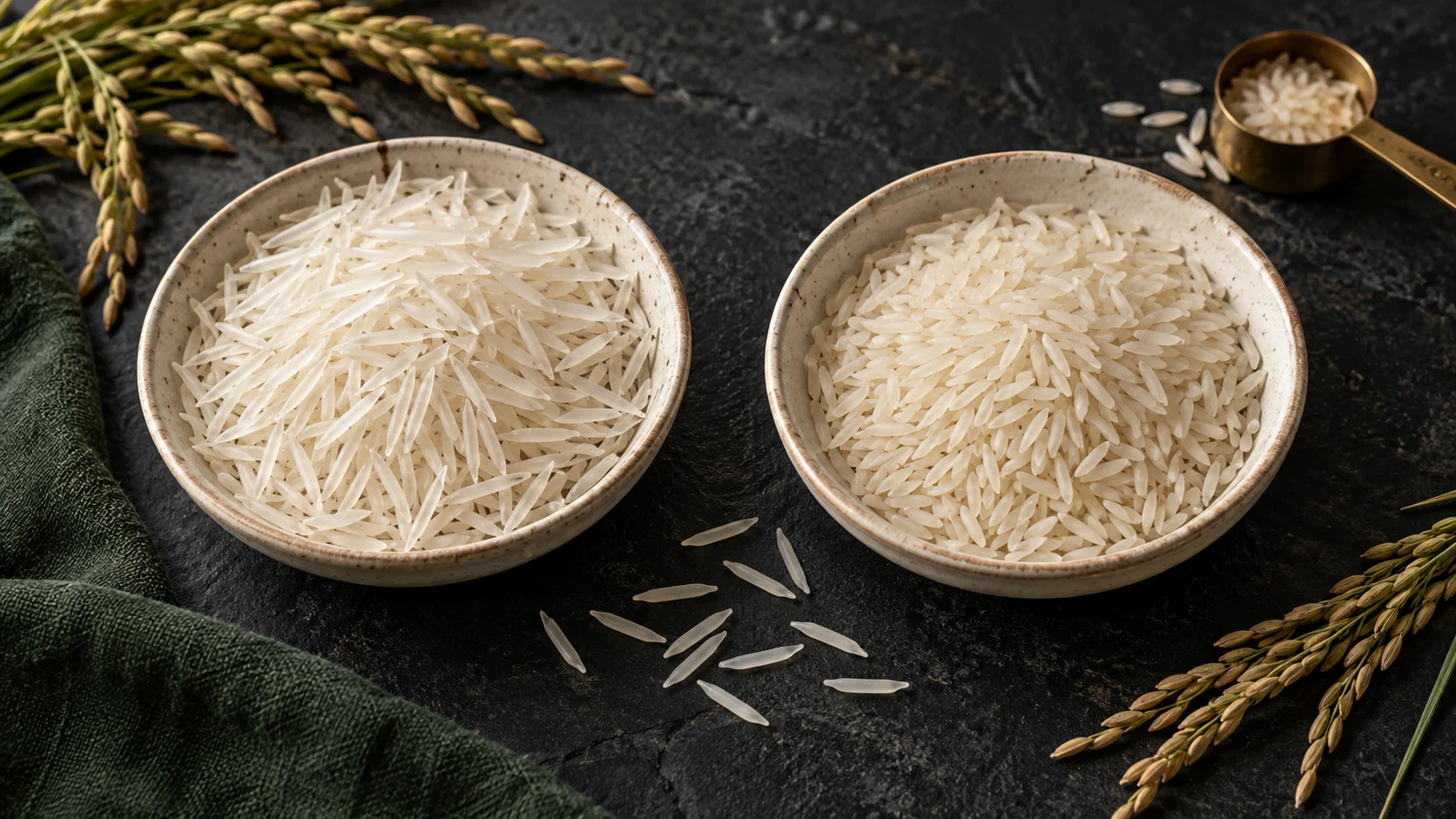
1509 vs 1401 Basmati Rice: How to Tell the Difference
Compare 1509 and 1401 Basmati rice by grain length, aroma, cooking performance, processing form, price positioning, and best use for bulk buyers.
Choosing between 1509 Basmati rice and 1401 Basmati rice can be difficult when both are described as long-grain, aromatic Indian Basmati. The difference becomes clearer when you compare the two varieties by uncooked grain length, aroma, cooked appearance, processing form, menu application, and target price point.
For rice importers, wholesalers, private-label brands, restaurants, and food-service buyers, the short answer is this:
Choose 1509 when extra-long visual appeal, elongation, and a strong quality-to-price balance lead the brief. Choose 1401 when a slightly shorter, uniform grain with a fuller traditional aroma and dependable cooking performance better suits the market.
This guide explains how to identify each variety, where each performs best, and what to check before placing a bulk Basmati rice order.
Extra-long value
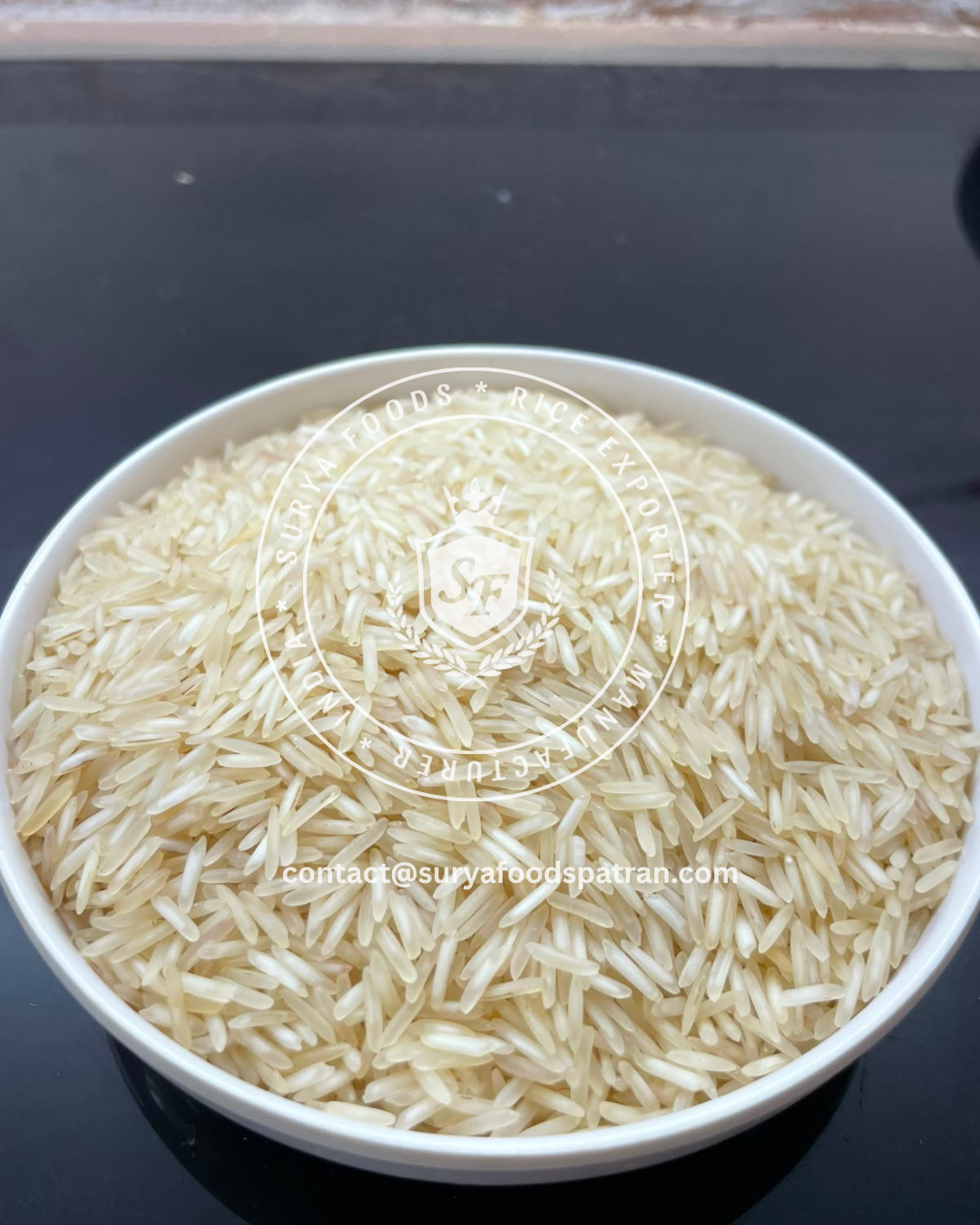
1509 Basmati
Long, slender presentation with excellent elongation and broad appeal across retail and food-service markets.
Aromatic consistency
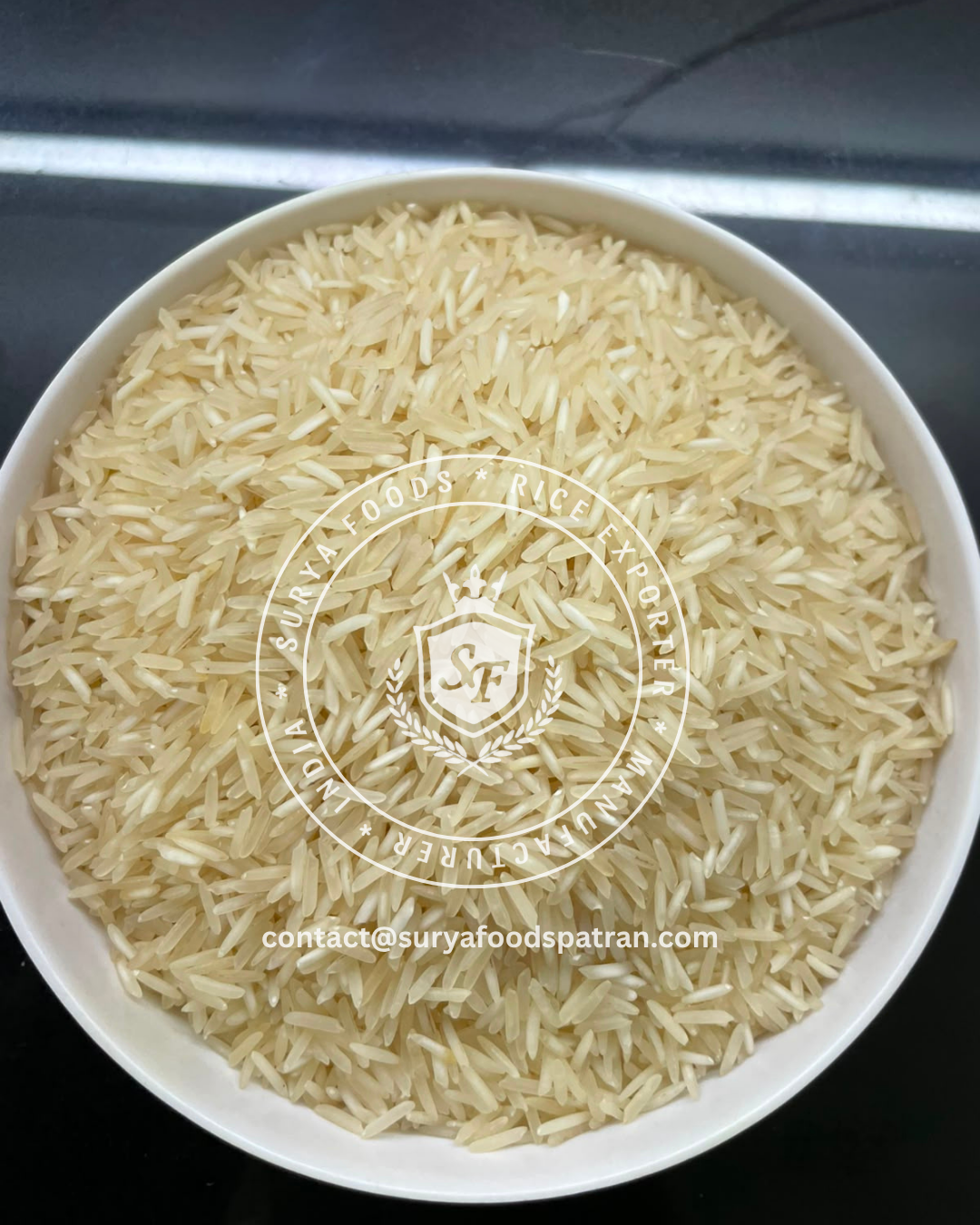
1401 Basmati
Uniform cooked shape, dependable texture, and a traditional aromatic profile for value-conscious programmes.
1509 vs 1401 Basmati Rice: Quick Comparison
| Buying factor | 1509 Basmati rice | 1401 Basmati rice |
|---|---|---|
| Visual profile | Extra-long, slender grain | Long, slender and generally more compact |
| Uncooked grain length | Common export offers start around 7.8 mm; exact lot specifications vary | Common export offers start around 7.2–7.7 mm; exact lot specifications vary |
| Cooked appearance | Strong lengthwise elongation and impressive plate coverage | Uniform cooked shape with good elongation |
| Aroma | Pleasant, clean Basmati aroma | Often selected for a stronger, more traditional aromatic impression |
| Texture | Fluffy, separate grains when cooked correctly | Firm, separate and consistent across service batches |
| Typical positioning | Superior-value, high visual appeal | Dependable value with aromatic character |
| Popular uses | Biryani, pulao, retail packs, catering and private label | Everyday premium rice, catering, restaurants and price-sensitive retail |
| Available forms | Raw, Steam and Sella | Raw, Steam and Sella |
Important: grain length, colour, broken percentage, moisture, crop year, ageing and cooked result vary by processor and lot. Treat catalogue figures as a starting point and approve the final shipment against a physical sample and certificate of analysis.
What Is 1509 Basmati Rice?
Pusa Basmati 1509, developed by ICAR–Indian Agricultural Research Institute, is known for early maturity, a slender grain and excellent cooking quality. ICAR describes it as an early-maturing, reduced-height variety that matures in about 115 days. For commercial buyers, however, its most visible advantage is the combination of long raw grains, attractive elongation after cooking, and competitive positioning.
1509 is commonly chosen by buyers who want:
- extra-long Basmati rice for biryani and pulao;
- a premium-looking grain without moving to the highest-priced segment;
- reliable separation in large-batch catering;
- Raw, Steam or Sella options for different market preferences; and
- an Indian Basmati rice variety suitable for retail, wholesale and private-label programmes.
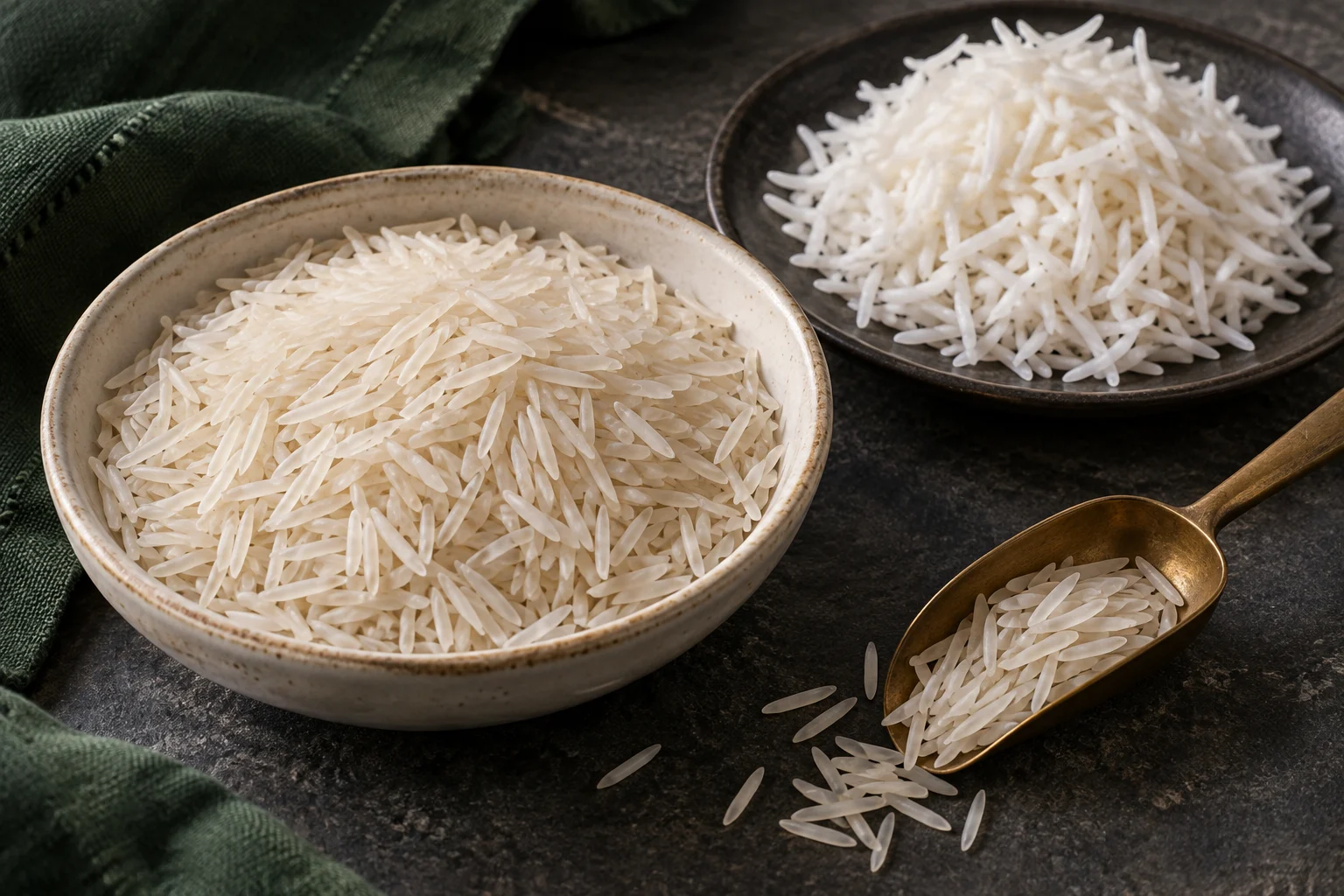
How to identify 1509 Basmati rice
Look for a long, narrow kernel with a clean, consistent appearance. In a side-by-side sample, 1509 will usually look longer than 1401. After cooking, it should extend mainly along its length while remaining separate rather than becoming broad or sticky.
A visual check is useful, but it cannot confirm varietal purity. For a bulk order, combine sample inspection with documentation, laboratory results and a controlled cooking test.
What Is 1401 Basmati Rice?
Pusa Basmati 1401, also known as Pusa Basmati 6 or PB-6, is recognised for high yield, uniform grain shape after cooking and strong aroma. ICAR literature describes it as an improvement over Pusa 1121 in agronomy and cooking quality, with a semi-dwarf plant type and uniform cooked grains.
1401 is often a strong fit when buyers need:
- authentic Basmati aroma at an accessible commercial position;
- a uniform grain for food-service consistency;
- reliable performance in everyday premium rice lines;
- Steam or Sella rice for firmer handling; and
- a value-led alternative that still carries genuine Basmati character.
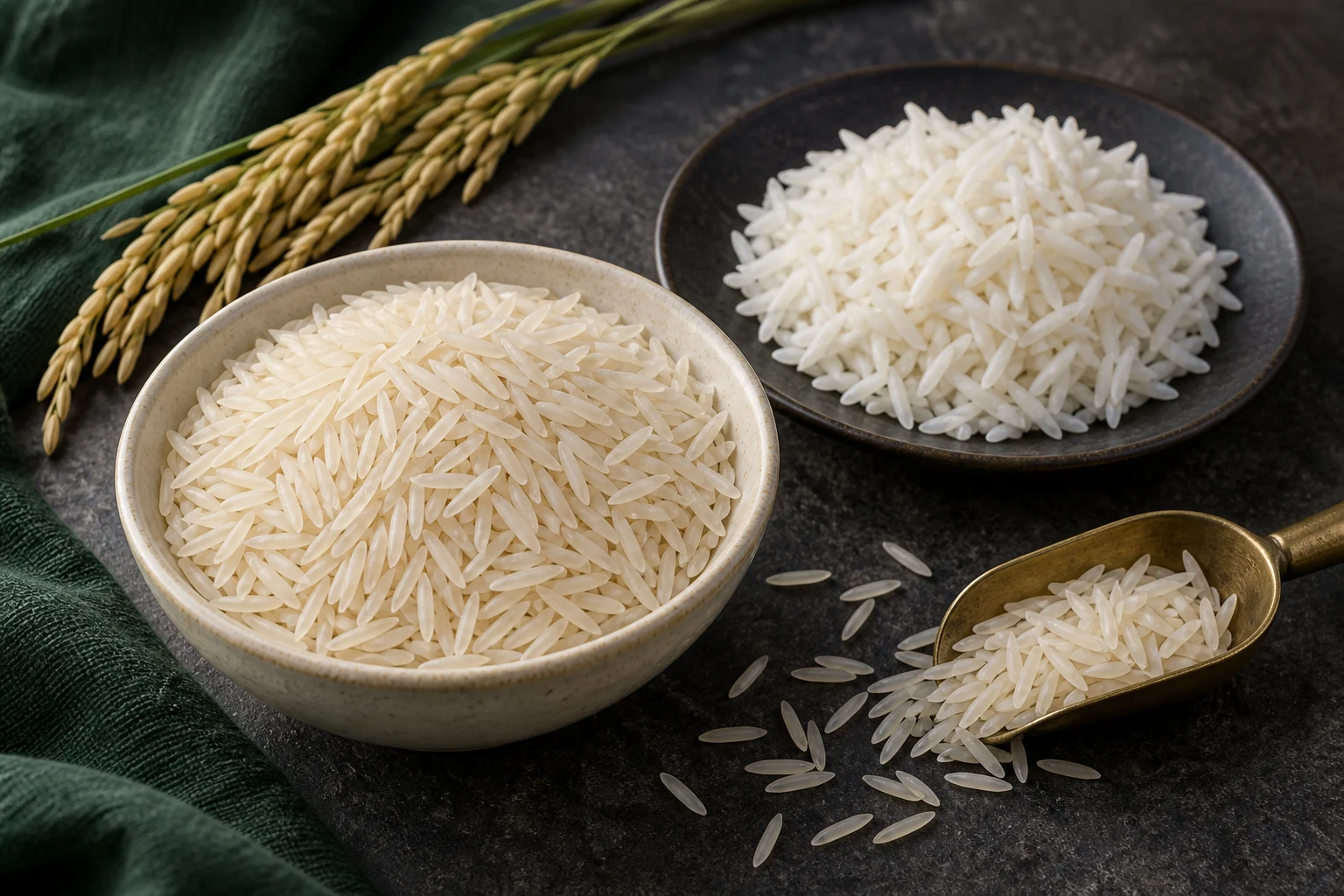
How to identify 1401 Basmati rice
Compared with 1509 from a similar crop year and processing method, 1401 generally appears slightly shorter and more compact. Its strength is not simply maximum length; buyers often select it for its uniformity, aroma, texture and consistent cooking behaviour.
Do not judge 1401 by colour alone. Steam processing, parboiling, polishing and ageing can make the same variety appear very different from one sample to another.
The Most Important Difference: Variety vs Processing Method
One of the most common sourcing mistakes is comparing 1509 Steam Basmati rice with 1401 Sella Basmati rice and assuming every visible difference comes from the seed variety. Processing can affect colour, hardness, cooking tolerance and aroma almost as much as the variety itself.
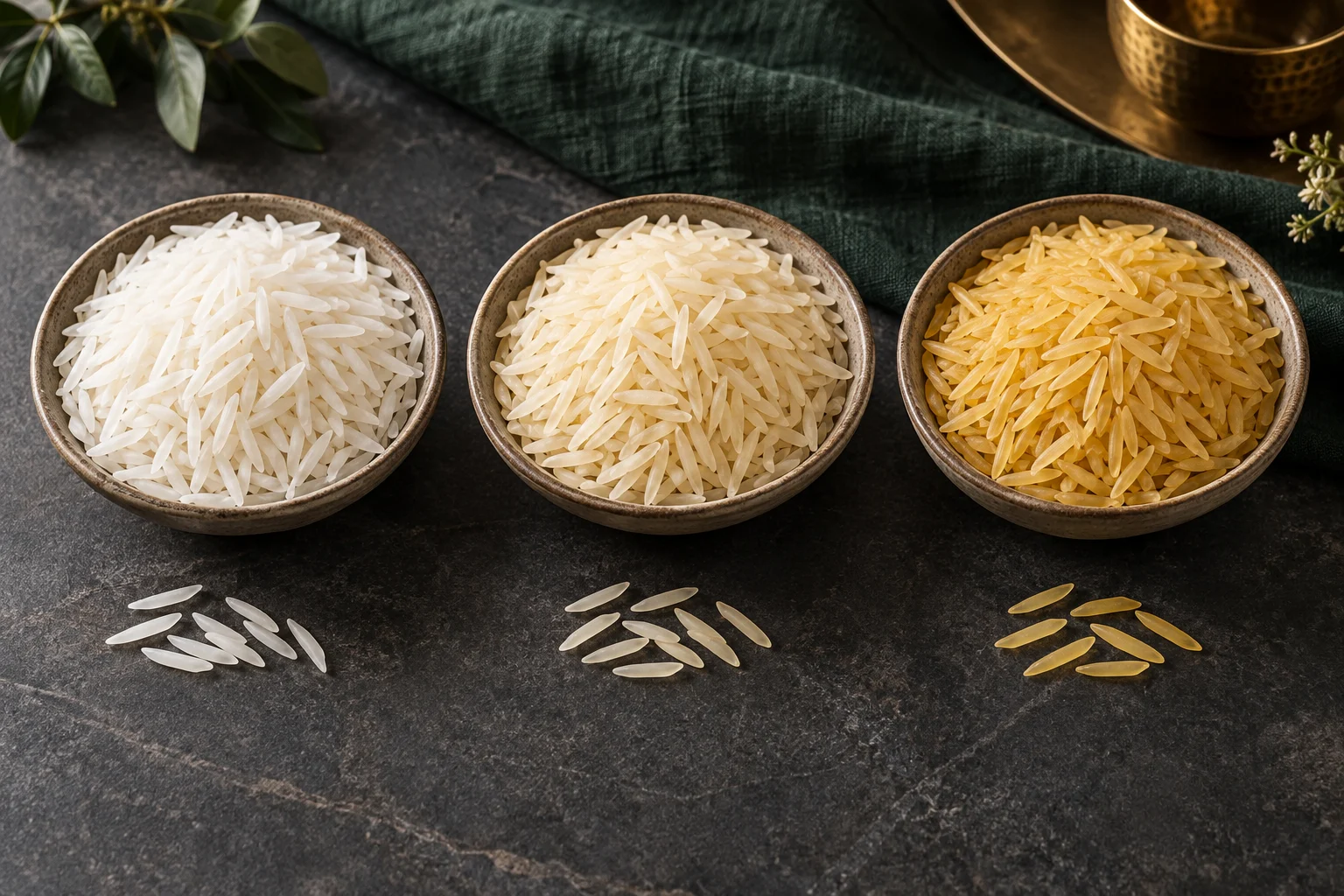
Raw Basmati rice
Raw rice is milled without a parboiling stage. It generally has a lighter appearance and a softer cooked bite. Raw 1509 works well when buyers want long visual presentation; Raw 1401 suits programmes that prioritise everyday aromatic character.
Steam Basmati rice
Steam treatment helps strengthen the kernel and promotes separate grains after cooking. 1509 Steam Basmati rice is popular for biryani, catering and premium retail packs because it combines elongation with consistency. 1401 Steam Basmati rice offers a uniform, aromatic result for restaurants and value-led retail lines.
Sella and Golden Sella Basmati rice
Sella rice is parboiled in the husk before milling. It is firmer, tolerant of large-batch cooking and less likely to break during preparation. Golden Sella receives a deeper heat treatment that gives the grain its characteristic amber-gold colour. Buyers sourcing 1509 Sella Basmati rice, 1509 Golden Sella rice or 1401 Sella Basmati rice should compare like-for-like processing forms.
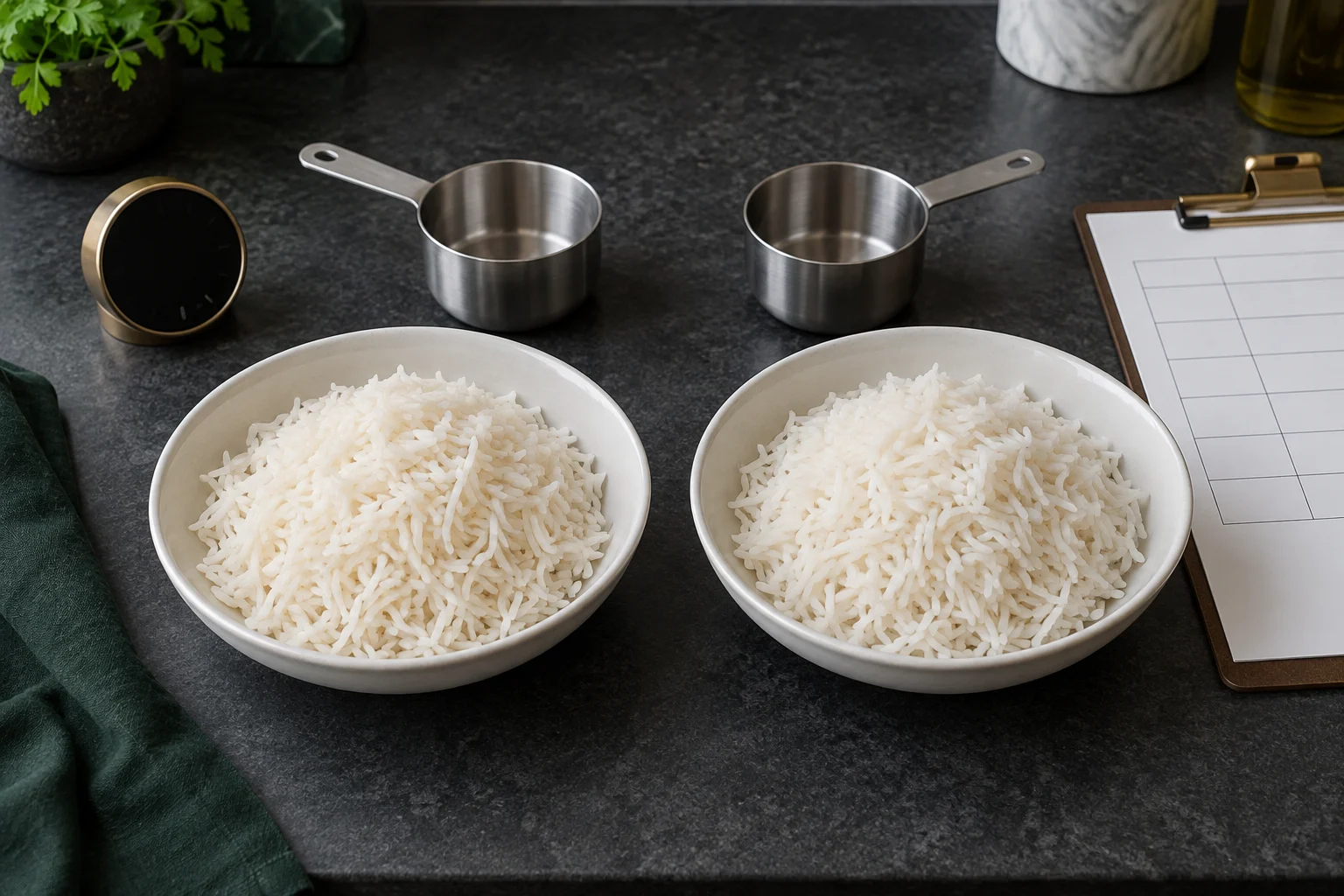
Buyer’s rule
Compare the same form, crop year and ageing period.
A fair test is 1509 Steam vs 1401 Steam—not a fresh raw sample against an aged Sella sample.
Which Basmati Rice Is Better for Biryani?
For a biryani where extra-long grains and dramatic plate presentation matter most, 1509 is usually the stronger fit. Its elongation helps create the separated, elegant appearance expected in restaurant and catering service.
For a biryani where aroma, firmness and consistent batch cooking carry more weight, 1401 can be the smarter choice. The right answer also depends on processing: a well-aged Steam or Sella lot may perform better in a large kitchen than a raw lot of the same variety.
Our practical recommendation:
- Premium visual presentation: 1509 Steam Basmati rice
- High-volume catering: 1509 Sella or 1401 Sella Basmati rice
- Aromatic everyday menu: 1401 Steam Basmati rice
- Private-label retail: choose after blind cooking tests with your target consumer panel
Which Variety Is Better for Importers and Bulk Buyers?
There is no universal winner. The best variety is the one that matches your customer’s expectations and your landed-cost target.
Choose 1509 when your brief says:
- extra-long grain;
- strong post-cooking elongation;
- high shelf appeal in transparent retail packaging;
- biryani and pulao positioning; or
- premium appearance at a balanced price.
Choose 1401 when your brief says:
- aromatic, uniform Basmati;
- consistent restaurant or catering performance;
- dependable everyday premium quality;
- firm texture in Steam or Sella form; or
- value-conscious market positioning.
Price should never be the only deciding factor. Basmati rice prices move with crop availability, ageing, processing, broken percentage, residue requirements, freight and packaging. Ask for a current quote against a complete specification rather than comparing variety names alone.
A 9-Point Quality Checklist Before You Buy
Whether you are evaluating a 1509 Basmati rice exporter or a 1401 Basmati rice supplier, request the following:
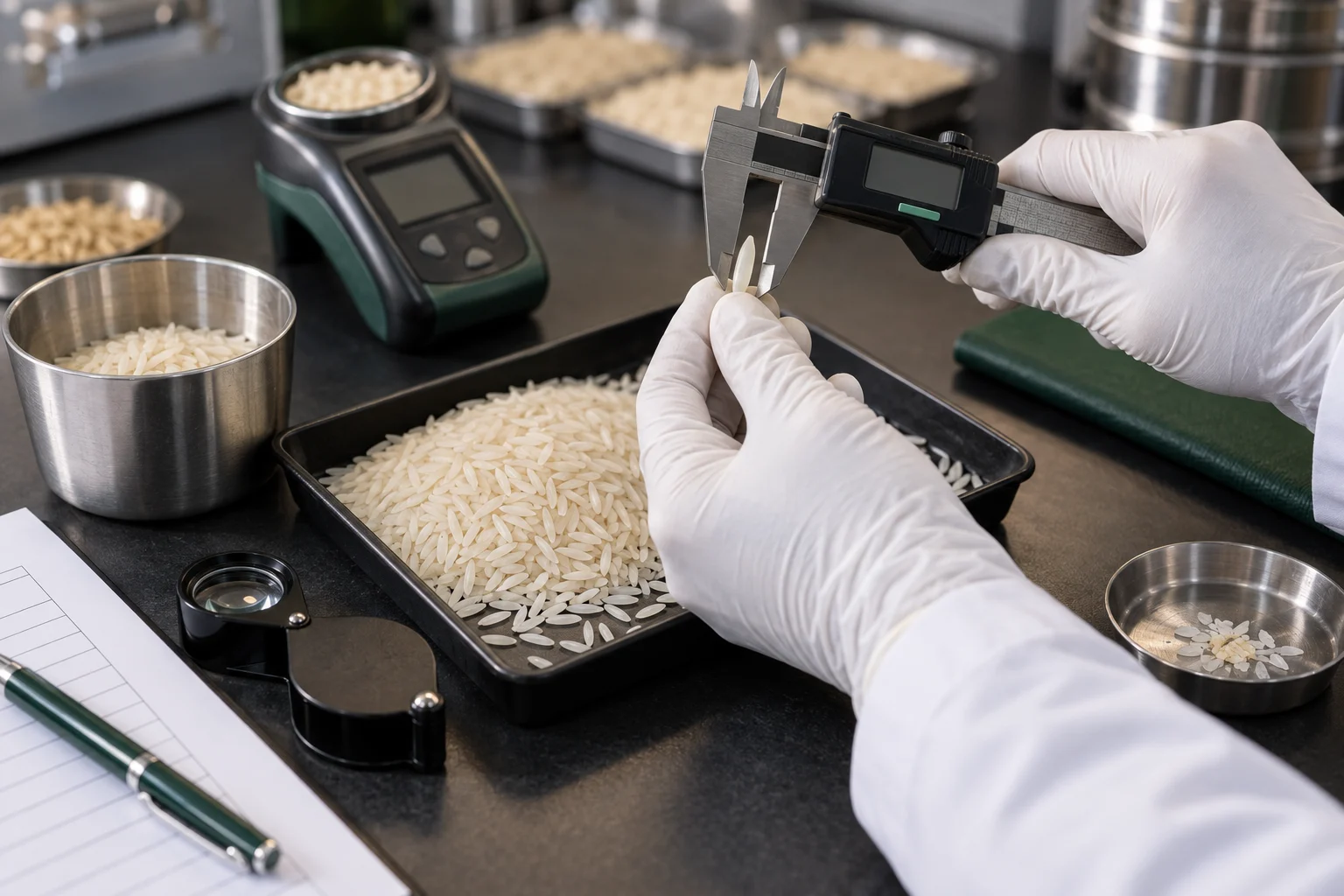
- Average grain length: measure a representative sample, not only the longest kernels.
- Varietal purity: confirm the agreed purity level and testing method.
- Broken percentage: specify total broken and acceptable tolerance.
- Moisture content: align it with shelf life, transport time and destination rules.
- Crop year and ageing: older rice often cooks drier and more separate, but performance must be tested.
- Cooking test: compare elongation, aroma, texture, stickiness and plate appearance under identical conditions.
- Foreign matter and defects: review discoloured, chalky, damaged and immature grains.
- Pesticide-residue compliance: define the destination market and required maximum residue limits before production.
- Packing and shipment terms: confirm bag material, pack size, labelling, inspection, loading plan and Incoterms.
Surya Foods uses cleaning, grading, polishing and optical sorting to support consistent export specifications. Buyers can also review our quality-control process and global export capabilities.
Frequently Asked Questions
Is 1509 Basmati rice longer than 1401?
In comparable commercial samples, 1509 is generally positioned as the longer grain. Exact measurements vary by lot, crop, milling and processing form, so verify the supplier’s specification and sample.
Is 1401 the same as Pusa Basmati 6?
Yes. Pusa Basmati 1401 is also commonly identified as Pusa Basmati 6 or PB-6.
Which is more aromatic: 1509 or 1401?
Both are aromatic Basmati varieties. 1401 is often chosen for a more pronounced traditional aroma, while 1509 is prized for its balance of aroma, length and value. Ageing and storage conditions also influence the final aroma.
Can I get 1509 and 1401 in Steam and Sella forms?
Yes. Both varieties are traded in Raw, Steam and Sella forms. Availability of Golden Sella and exact specifications should be confirmed for the current crop and order quantity.
Which variety is more affordable?
Pricing changes by crop year, grade, processing method, ageing, residue specification and freight. Both 1509 and 1401 can serve value-oriented programmes; request like-for-like quotes before choosing.
What is the best way to compare samples?
Cook equal weights with the same water, soaking time and heat method. Record raw length, cooked length, aroma, texture, separation and yield. A blind side-by-side cooking test is more reliable than judging bag appearance alone.
Final Verdict: 1509 or 1401?
1509 Basmati rice is the better starting point for buyers seeking extra-long visual impact, strong elongation and broad premium-value appeal. 1401 Basmati rice is a compelling choice for buyers who prioritise aromatic character, uniform cooked grains, firm texture and dependable value.
The smartest decision is specification-led: compare the same processing form, approve a representative pre-shipment sample, and document every quality parameter in the purchase contract.
Source with confidence
Need help choosing 1509 or 1401?
Tell us your destination market, preferred processing form, pack size and target specification. Our export team can help you compare samples and plan a bulk or private-label order.
Sources and further reading
- APEDA: Basmati Rice overview, growing regions and export context
- ICAR: Basmati rice varieties and Pusa Basmati 1509 characteristics
- ICAR–Indian Institute of Rice Research: Pusa Basmati 6 (Pusa 1401) quality characteristics
Product specifications are indicative and may vary by crop year, processing form and contract. Always confirm the approved lot specification before purchase.