
How Parboiled Rice Is Made: Process, Benefits and Uses
Follow the parboiled rice process from soaking and steaming to drying, milling and cooking, with simple buyer guidance.
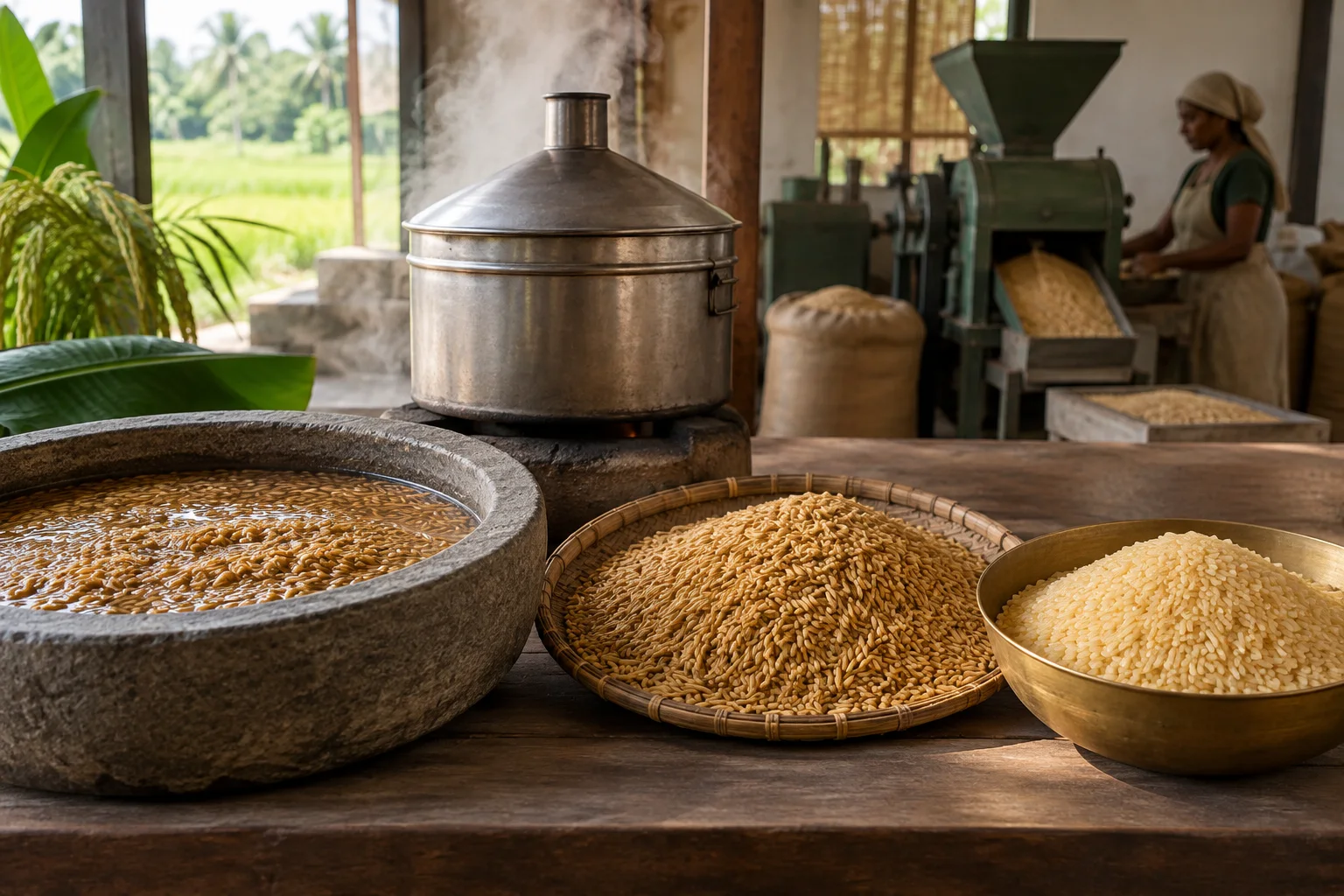
Parboiled rice is processed while the grain is still inside its husk. The paddy is soaked, heated and dried before normal milling. In Basmati trade, this family includes White Sella and Golden Sella products.
The process changes the kernel structure, which is why parboiled rice often feels firmer and handles large kitchens well.
Quick answer
Parboiling uses controlled water and heat before milling to strengthen kernels. It can improve milling recovery and produce firm, separate rice suited to catering and biryani.
Key points at a glance
- Soaking lets moisture enter the paddy.
- Heat treatment changes the starch structure.
- Drying must be controlled to prevent cracks.
- Milling removes husk and bran after treatment.
Step 1: cleaning and soaking
Processors first remove field impurities, then soak paddy so moisture reaches the kernel evenly. Poorly controlled soaking can create uneven colour or odour, so water quality and time matter.
Step 2: heat treatment
Steam or another controlled heat process acts on the hydrated grain. Temperature and duration influence colour and firmness. A deeper treatment is associated with Golden Sella’s amber appearance.
Step 3: careful drying
The paddy must be dried to a safe, even level before milling. Drying too quickly or unevenly can create internal stress and breakage. The mill-to-container guide explains how handling affects finished quality.
Step 4: milling, grading and sorting
After drying, the husk and bran layers are removed. Grading separates sizes, while optical sorting helps remove discoloured or defective grains. The finished lot is then tested and packed.
Where parboiled rice works best
Its firm texture and separation make it useful for restaurants, caterers, buffets and markets that prefer Sella rice. It may need a longer soak or cooking time than Raw rice. Always follow the supplier’s sample result.
A simple decision checklist
- Check even colour and odour.
- Review moisture and broken percentage.
- Test soaking and cooking time.
- Assess holding performance.
- Specify White or Golden Sella clearly.
Frequently asked questions
Is parboiled rice already cooked?
No. It has been heat-treated in the husk but still needs full cooking.
Why is Golden Sella amber?
Controlled parboiling treatment creates the colour.
Is all parboiled rice Basmati?
No. Parboiling is a process used with many rice varieties.
Final takeaway
Parboiling turns paddy into a stronger, more cooking-tolerant grain. Process control determines whether that advantage reaches the buyer.
For a quotation, sample or specification discussion, review Surya Foods products, our quality-control process, and global export support, then contact our team.