
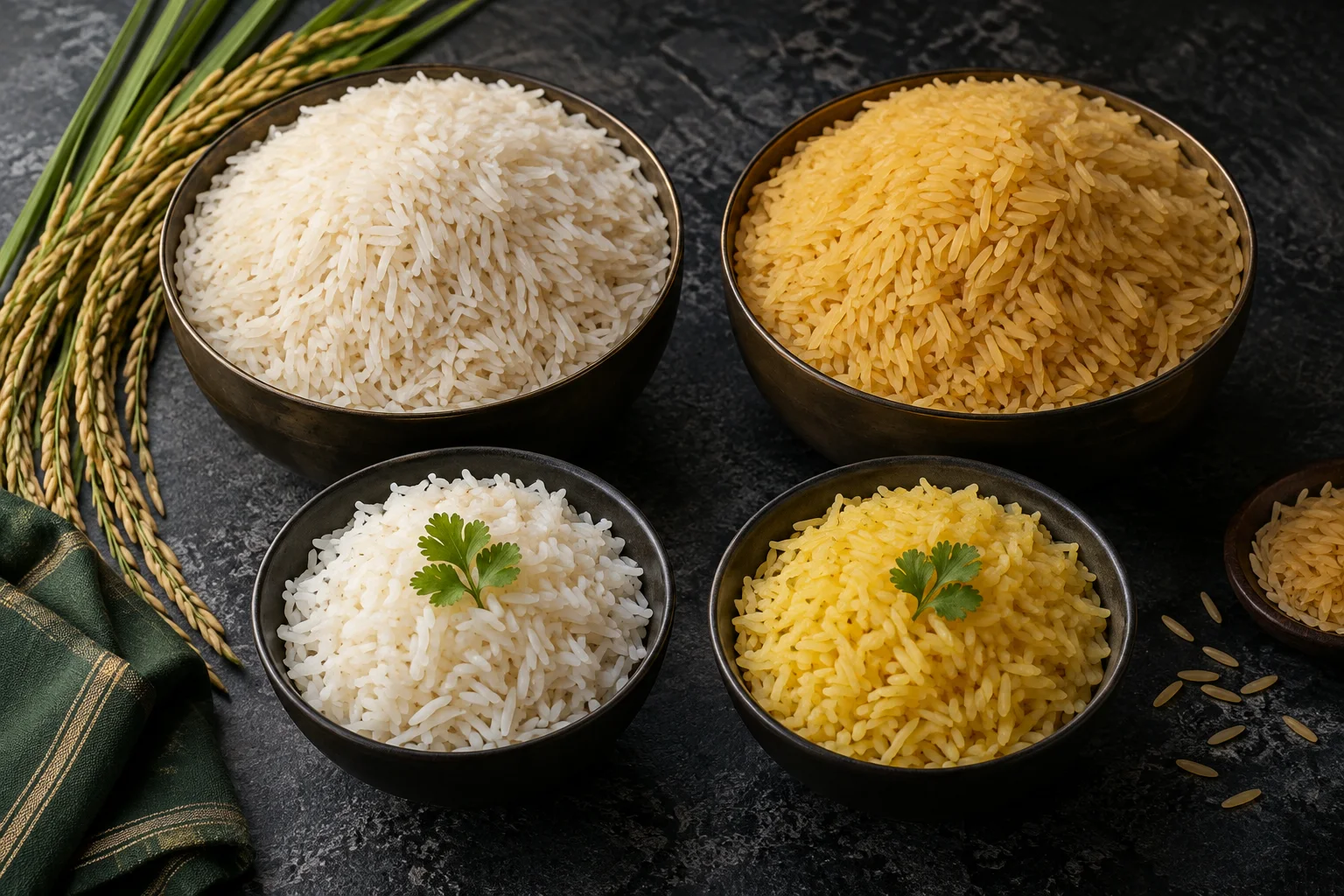
White Sella vs Golden Sella Rice: What Is the Difference?
A simple comparison of White Sella and Golden Sella rice covering colour, parboiling, texture, cooking and buyer selection.
White Sella and Golden Sella are both parboiled rice forms. Their visible difference is colour, but buyers should also consider aroma, firmness, cooking time and what consumers expect on the shelf.
The name Sella describes processing, not one variety. Both forms can be produced from 1121, 1509, 1401 and other suitable rice varieties.
Quick answer
White Sella offers firm parboiled performance with a pale appearance. Golden Sella offers similar large-batch strength with a deeper amber colour and distinct market identity.
Key points at a glance
- Both are parboiled before milling.
- Heat treatment influences colour and firmness.
- Variety still affects grain potential.
- Customer colour preference is commercially important.
Why the colours differ
Parboiling moves moisture and heat through the grain before milling. A deeper treatment produces the familiar golden or amber shade, while White Sella remains pale. Colour should be uniform across a well-graded lot.
Texture and kitchen performance
Both forms are known for firm grains and tolerance during large-batch cooking. Golden Sella is especially familiar in markets that value colour and robust biryani performance. White Sella suits buyers who want firmness without a strong golden tone.
How to run a useful test
Record soaking time, water, cooking time, cooked length, firmness and holding performance. Allow the rice to rest before scoring. Compare equal varieties and similar ages.
Use our sample evaluation checklist for consistent notes.
What to specify
Write the variety, White or Golden Sella form, average length, broken percentage, moisture, colour tolerance, crop year and packing. Include a retained colour sample when shade is important.
Check the certificate of analysis guide before shipment approval.
A simple decision checklist
- Ask customers which colour they expect.
- Match the same variety.
- Test cooking and holding.
- Set a colour reference.
- Confirm all tolerances in writing.
Frequently asked questions
Is Golden Sella naturally yellow?
Its amber colour comes from controlled parboiling treatment, not from adding artificial colour.
Which cooks firmer?
Both can be firm; the exact result depends on variety, process and age.
Is Sella suitable for restaurants?
Yes, its handling tolerance is one reason it is popular in high-volume kitchens.
Final takeaway
The best Sella form is the one your market recognises and your kitchen can use consistently. Compare colour and cooking performance together.
For a quotation, sample or specification discussion, review Surya Foods products, our quality-control process, and global export support, then contact our team.