
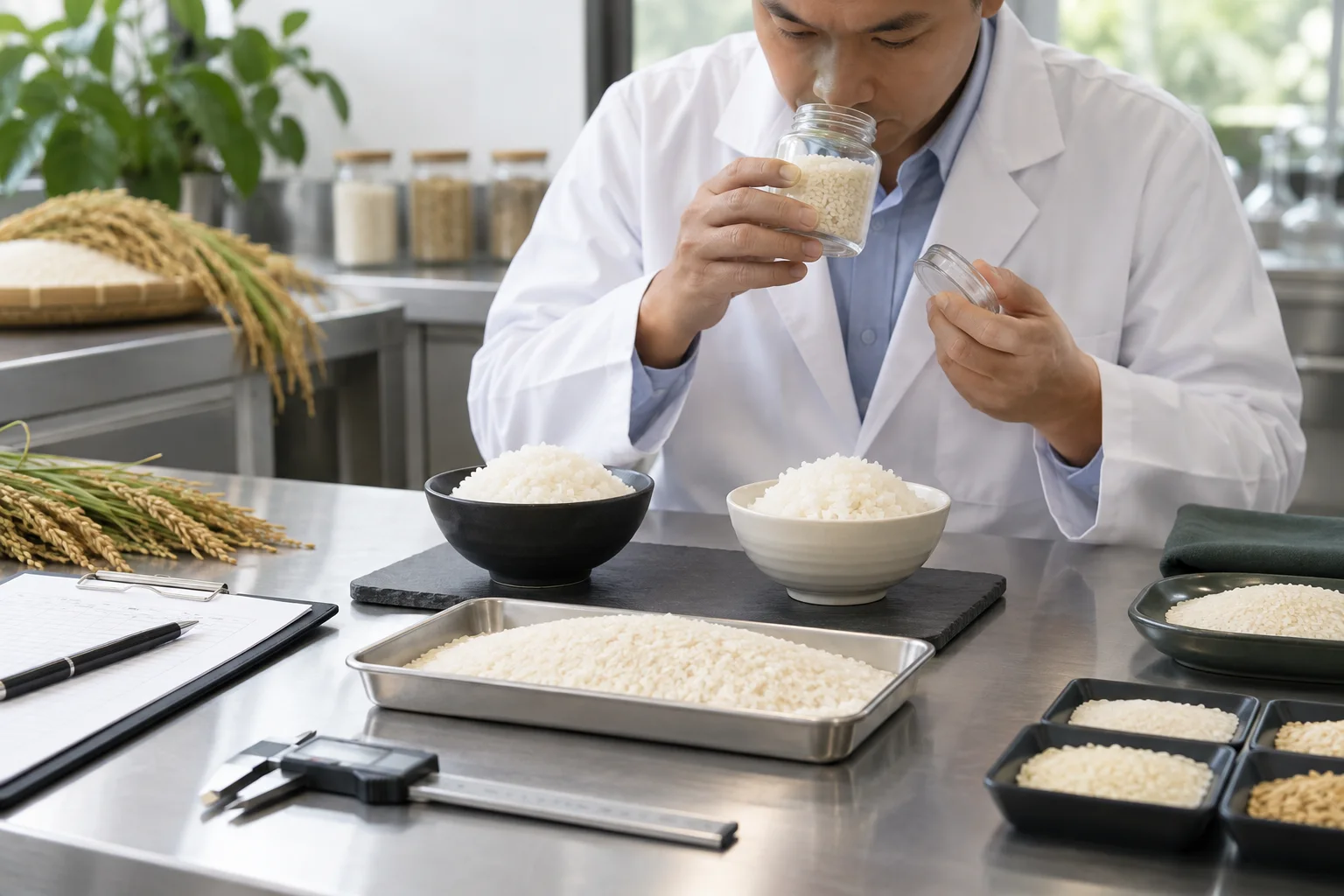
How to Evaluate a Basmati Rice Sample Before Buying
Use a repeatable raw and cooked sample test for grain length, aroma, moisture, defects, texture, separation and yield.
A polished handful can hide the variation inside a shipment. A useful sample must represent the lot, and the test must be repeatable enough that two people can discuss the same result.
Evaluate both raw appearance and cooked performance. Customers eat cooked rice, not a specification sheet.
Quick answer
Confirm sample identity, inspect a mixed portion, measure several grains, record defects and moisture, then cook equal weights under controlled conditions and retain the approved reference.
Key points at a glance
- Representative sampling comes first.
- Measure averages, not hero grains.
- Blind cooking reduces bias.
- Keep signed reference samples sealed.
Check sample identity
Label supplier, variety, processing form, crop year, lot, date and sampling method. A beautiful courier sample has little value if it cannot be linked to production and shipment.
Inspect the raw rice
Spread rice on a dark tray. Look for broken, chalky, damaged, immature, discoloured and foreign grains. Smell for clean characteristic aroma and any damp or chemical odour. Measure multiple kernels and moisture.
Run a controlled cook
Use equal dry weight, rinse, soak, water, pot, heat and rest. Code the bowls so tasters do not know the supplier. Score aroma, cooked length, separation, texture, breakage and yield.
Approve with tolerances
A reference sample cannot describe every acceptable variation. Add numeric tolerances and agreed test methods. Link the approval to a certificate of analysis and pre-shipment inspection plan.
A simple decision checklist
- Verify source and lot.
- Mix before taking test portion.
- Measure raw defects.
- Cook blind and equal.
- Seal and sign references.
Frequently asked questions
How large should a sample be?
It must be representative and sufficient for repeat tests; agree the method with the supplier or inspector.
Can I approve from a photo?
Photos help screen appearance but cannot prove aroma, moisture, texture or purity.
Why retain two samples?
Buyer and supplier can keep matched references if a later dispute occurs.
Final takeaway
A sample protects the order only when it is representative, measurable, cooked consistently and tied to the final lot.
For a quotation, sample or specification discussion, review Surya Foods products, our quality-control process, and global export support, then contact our team.