
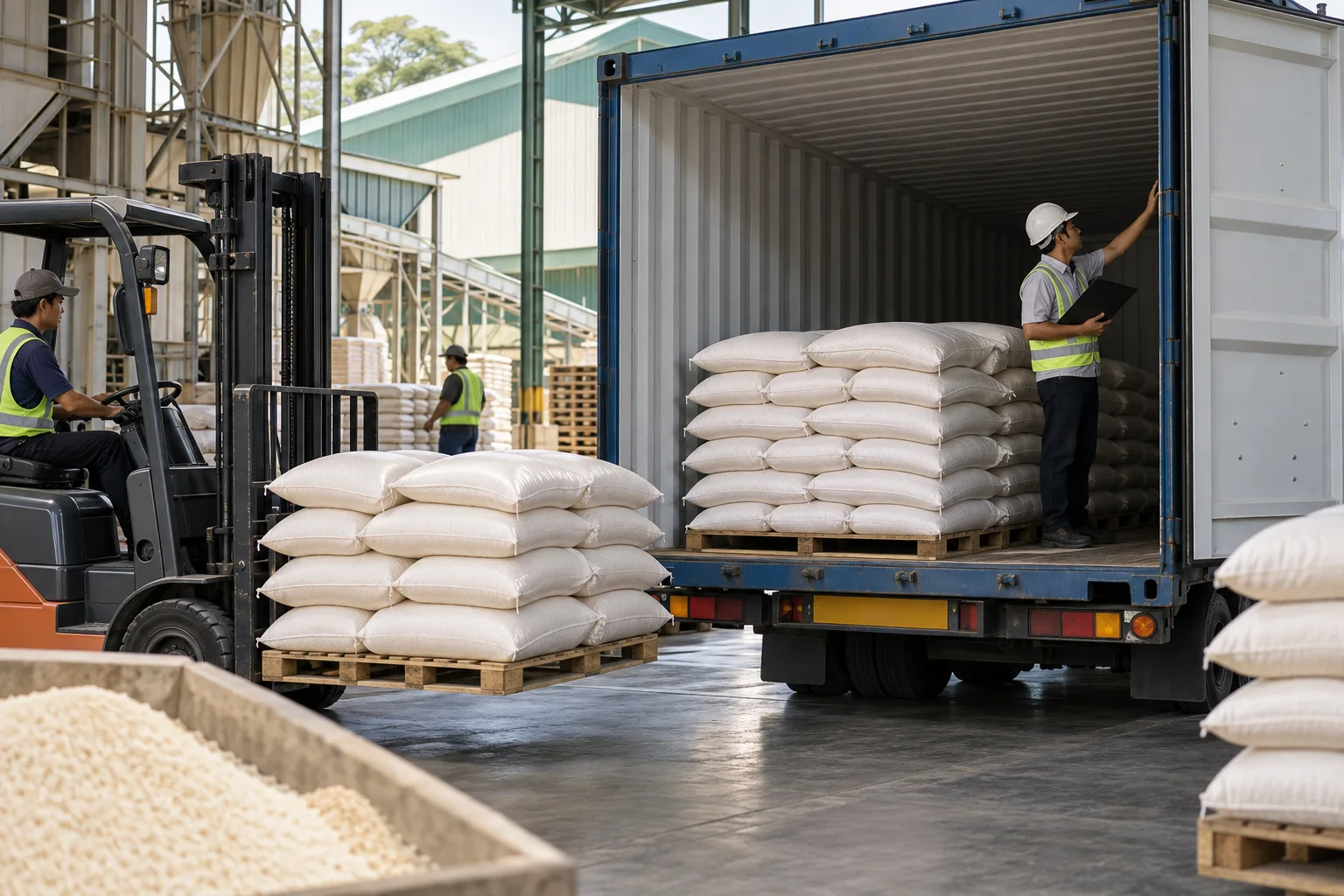
Rice Container Loading and Packaging: Export Checklist
Protect bulk rice shipments with practical checks for bags, pallets, container condition, moisture, loading and seal records.
A clean rice lot can still arrive damaged if the bag, container or loading method fails. Moisture, odour, sharp edges, weak stacking and missing records are common preventable risks.
The loading plan should be agreed while the product and pack are being designed—not after the truck reaches the mill.
Quick answer
Use food-suitable packaging, inspect a clean dry odour-free container, protect bags from walls and sharp points, distribute weight safely, record loading and apply the verified seal.
Key points at a glance
- Match packaging to route and handling.
- Inspect empty container condition.
- Control moisture and condensation risk.
- Keep photo and seal records.
Choose the right pack
Common formats include woven polypropylene sacks, laminated bags and smaller retail packs inside cartons. Specify food-contact suitability, liner, stitching or sealing, dimensions, artwork and drop strength. A strong bag that customers cannot handle is still the wrong design.
Inspect the empty container
Check roof, walls, floor, doors and seals for holes, dampness, stains, pests, chemical smell and protrusions. The container should be clean, dry and suitable for food cargo. Record its number and condition before loading.
Plan the stack
Keep bags away from sharp surfaces and use approved protection where needed. Stack to limit movement and crushing while respecting weight limits. Palletised and floor-loaded plans have different volume, handling and pest-treatment considerations.
Manage moisture
Rice and packaging should be within agreed moisture limits. Rapid temperature changes can create condensation during the voyage, so route, season, ventilation strategy and suitable moisture control require professional planning.
Close the evidence trail
Count bags, confirm markings, photograph loading stages and record seal application. Send the packing list and loading report promptly. The mill-to-container guide covers earlier quality steps.
A simple decision checklist
- Approve bag specification.
- Inspect container inside and outside.
- Confirm lot and bag count.
- Load to the agreed pattern.
- Record seal and dispatch.
Frequently asked questions
Are pallets always better?
They speed handling but reduce usable volume and may require treatment; compare the full route.
Can rice bags touch container walls?
Use a professionally designed loading plan that manages condensation and abrasion risks.
What photos are useful?
Empty condition, container number, loading stages, final stack, closed doors and seal.
Final takeaway
Packaging and loading are part of the product. A documented, clean and dry load protects both rice quality and the buyer relationship.
For a quotation, sample or specification discussion, review Surya Foods products, our quality-control process, and global export support, then contact our team.