
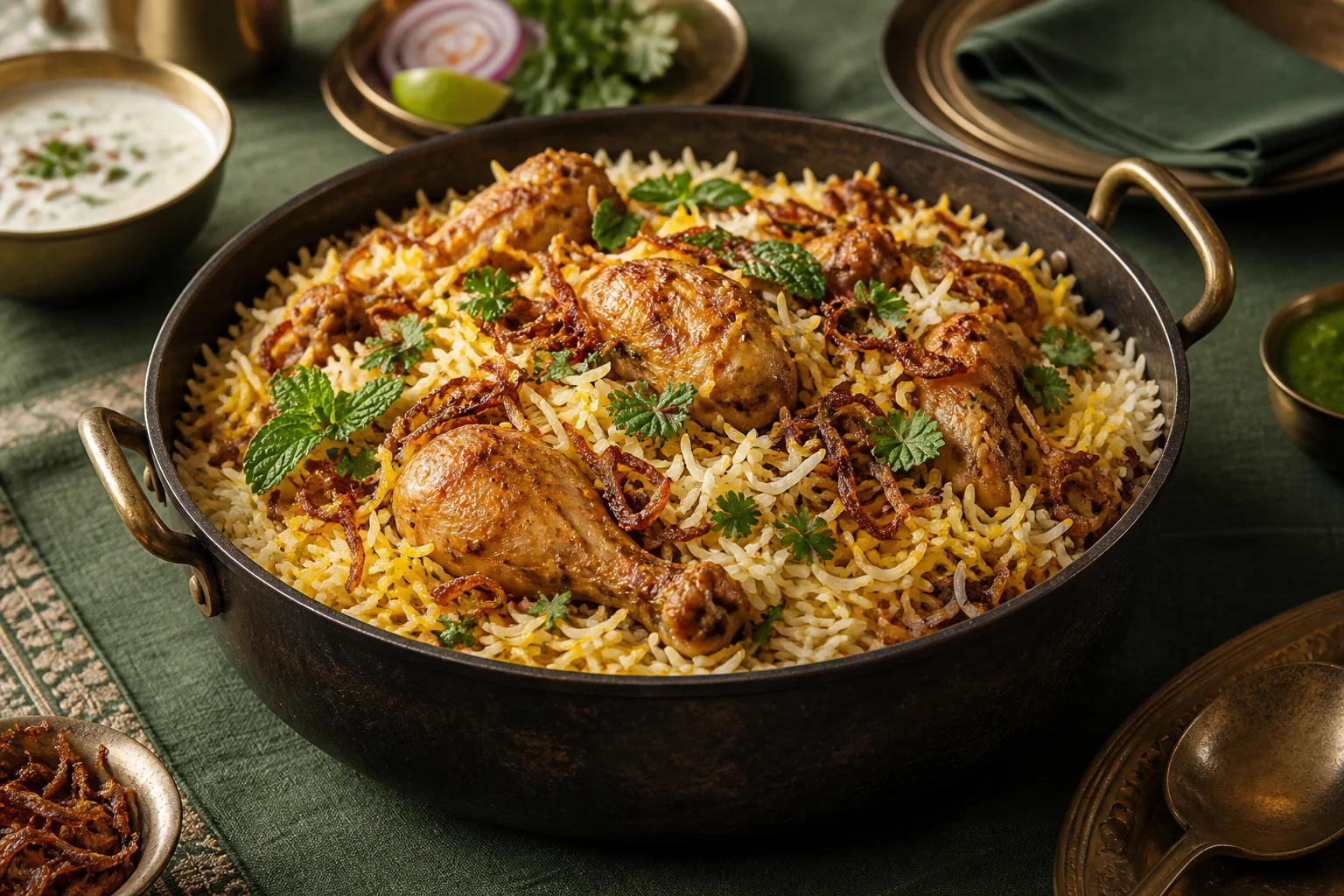
Best Basmati Rice for Biryani: Variety and Cooking Guide
Choose the best Basmati rice for biryani by variety, processing, ageing, grain length, kitchen method and budget.
The best biryani rice must do more than look long in the bag. It should absorb flavour, stay separate, survive layering or dum cooking and still feel pleasant after resting.
1121 and 1718 are common premium choices, while 1509 offers strong visual value. Steam and Sella forms are popular when firmness and batch tolerance matter.
Quick answer
For dramatic premium presentation, start with an aged 1121 or 1718 sample. For strong value, test 1509. Choose Steam or Sella when your kitchen needs extra separation and holding strength.
Key points at a glance
- Test the rice with your exact biryani method.
- Cooked length is only one quality measure.
- Ageing can support separation.
- Sella handles large batches well.
What good biryani rice must do
A good sample produces long, separate grains with enough firmness to survive par-cooking, draining, layering and final steaming. It should carry spice and stock without becoming heavy. Aroma must support the dish rather than disappear under it.
Variety choices
1121 and 1718 suit flagship biryani where extra-long presentation earns attention. 1509 can deliver an attractive plate at a more accessible position. 1401 may suit kitchens that value aroma, uniformity and dependable texture. Compare the major Pusa varieties before sampling.
Raw, Steam or Sella
Raw rice can give a softer, aromatic result. Steam rice balances tenderness with separation. White or Golden Sella is firmer and popular for high-volume service. The right form depends on whether you use absorption, open-pot or dum cooking.
Run a kitchen trial
Use the same pan, water, soak, salt, heat and resting time for each candidate. Record breakage, cooked length, aroma, separation and yield. Then repeat at service volume. A small perfect pot may behave differently in a 20-kilogram batch.
A simple decision checklist
- Define premium or value brief.
- Shortlist two varieties.
- Choose matching processing forms.
- Test small and service-size batches.
- Approve taste, yield and holding together.
Frequently asked questions
Is 1121 best for every biryani?
No. It is a strong premium option, but recipe, customer and cost can make another variety better.
Why do restaurants use Sella rice?
Its firmness and separation help during large-batch cooking and holding.
Should biryani rice be soaked?
Usually yes, but the time should suit the variety, age and process.
Final takeaway
The best biryani rice is the one that performs in your pot, at your service volume, for your customer and price point.
For a quotation, sample or specification discussion, review Surya Foods products, our quality-control process, and global export support, then contact our team.