
The Ultimate Guide to Rice: Choosing the Perfect Grain Every Time
A comprehensive guide to rice varieties, grain length, starch content, cooking behavior, and culinary uses — from nutty Basmati and fragrant Jasmine to Forbidden black rice and Wild rice.
Rice is one of the most important staple foods in the world, feeding billions of people every day and shaping cuisines across the globe. From a fragrant plate of biryani to a comforting bowl of risotto, this naturally gluten-free grain lends itself to an endless number of recipes.
However, many simply think of rice as just “white” or “brown.” In reality, there is a massive variety of grains, each with its own unique flavor, texture, cooking behavior, and nutritional value. Understanding these characteristics is essential for home cooks, restaurant owners, and food businesses alike to ensure the right grain is used for the right dish.
This guide examines the factors that differentiate types of rice — from nutty Basmati to fragrant Jasmine — so you can choose the best rice for your next recipe.
Is Rice a Grain?
Yes! Rice is one of the eight true cereal grains, along with wheat, oats, corn (maize), barley, rye, millet, and sorghum. Each grain of rice consists of four distinct parts:
- Hull (Husk): The tough outer shell enclosing the grain. This is removed in all commercially available rice types.
- Bran: The nutritious layer under the hull. It can be tan, reddish, or black depending on the variety. It is left intact in brown and whole-grain rice but removed for white rice.
- Endosperm (White Rice): The starchy center left behind once the bran and germ are milled away. This is the part most commonly consumed.
- Germ: The nutrient-dense rice kernel found under the hull, packed with B vitamins, minerals, and proteins. It helps give rice its color and added nutritional benefits.
Long Grain vs. Medium Grain vs. Short Grain Rice
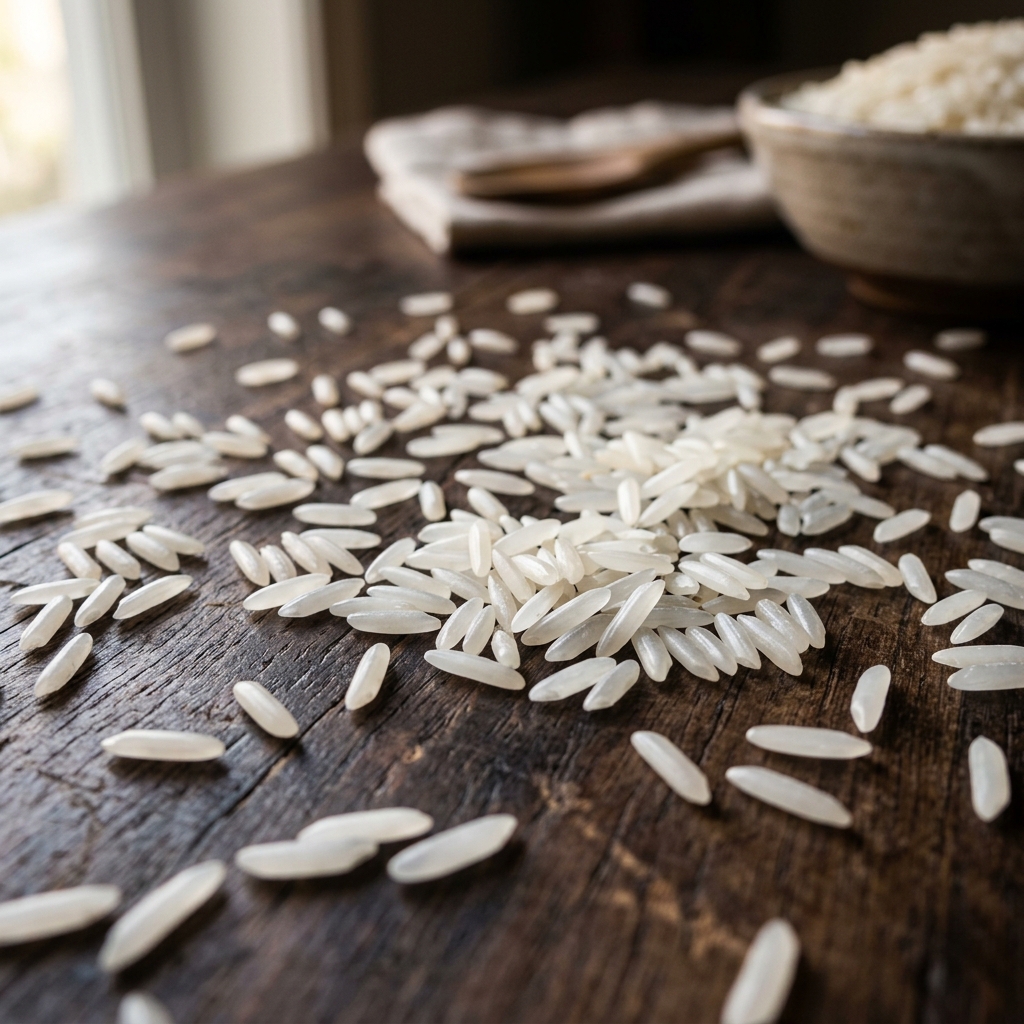
The shape and size of the grain directly dictate its starch content and how it behaves in the pot. Rice is typically characterized as one of three varieties based on the length and shape of the grain.
10 Types of Rice You Should Know
There are a variety of factors involved in choosing what rice will best suit your needs. Take a look at these 10 common types of rice to determine which grain size, texture, and flavor profile will work best for your next recipe.
1. Arborio Rice
Arborio rice is a medium-grain rice that is wider in size and has a characteristic white dot at the center of the grain. It is named after the town of Arborio in the Po Valley of Italy. Due to its high starch content, it develops a chewy, sticky, and highly creamy texture when cooked.
- Grain Length: Medium grain
- Flavor: Creamy, mild
- Best Used For: Risotto, rice pudding, and soups
2. Basmati Rice
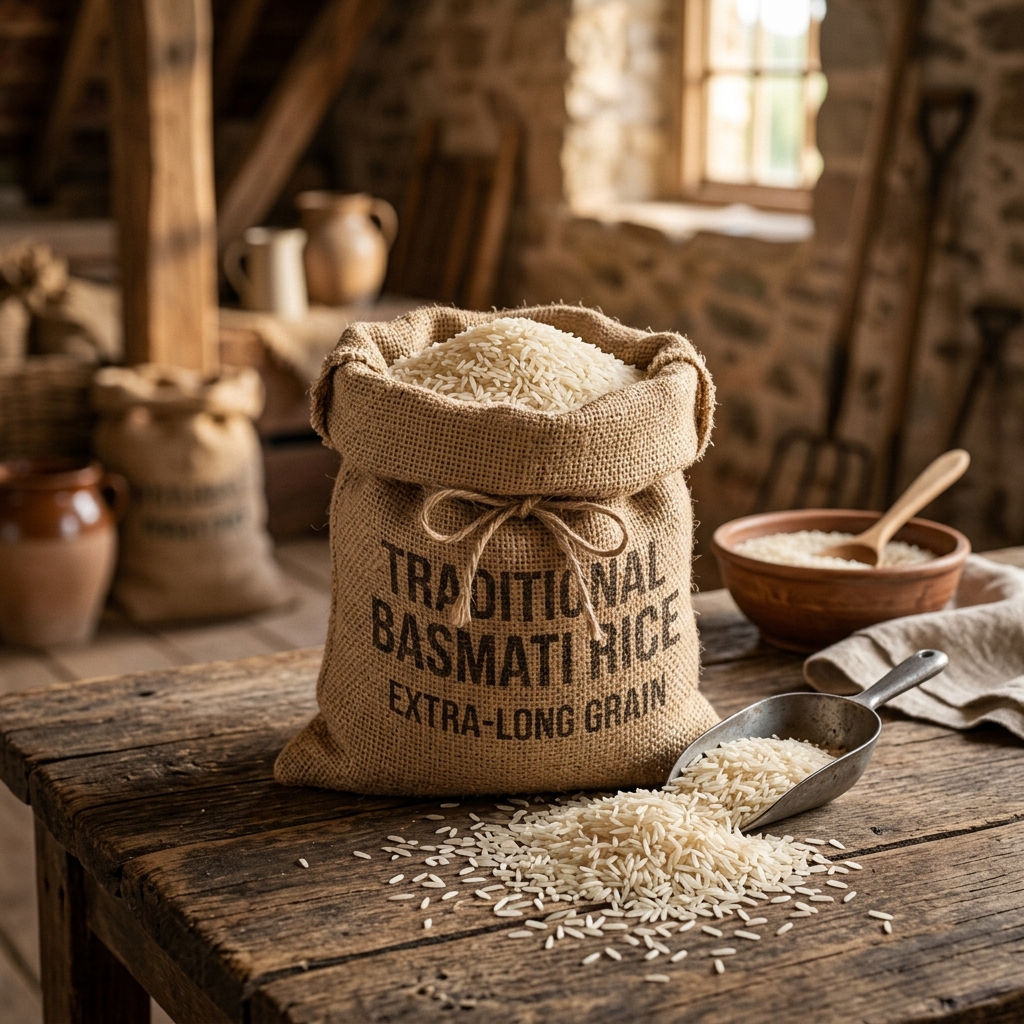
When cooked, Basmati rice grains are long, dry, and beautifully separate. They impart a pleasant, nutty aroma and flavor to any dish. Basmati is the undisputed king of Indian, Middle Eastern, and South Asian cuisines. At Surya Foods, we mill premium 1121, 1509, 1718, Pusa, and Traditional Basmati varieties.
- Grain Length: Long grain (up to 8.4mm after cooking for 1121 variety)
- Flavor: Nutty, aromatic
- Best Used For: Biryani, dal, curry, pilafs, saffron rice, and pulao
3. Black (Forbidden) Rice
Black rice, also known as forbidden rice, gets its striking color from anthocyanins — the same powerful antioxidant found in blueberries and blackberries. It has long been used in Chinese cuisine for its health-promoting properties.
- Grain Length: Long, medium, or short grain (varies by variety)
- Flavor: Mildly nutty and earthy
- Best Used For: Grain bowls, rice pudding, soups, rice salads, and Chinese black rice cake
4. Bomba Rice
Bomba rice is a short-grain rice cultivated in the Valencia region of Spain. It has a firm texture and absorbs significantly more liquid than other varieties without turning to mush, making it the mandatory choice for authentic paella.
- Grain Length: Short grain
- Flavor: Mild; absorbs the flavor and aroma of the stock and spices it's cooked with
- Best Used For: Paella, Mediterranean dishes, and risotto
5. Brown Rice
Brown rice is a whole grain that retains its bran and germ layers, giving it a characteristic tan color. It has a firmer texture and nuttier flavor than white rice, and provides more fiber, vitamins, and minerals per serving. Brown rice can be substituted in any recipe that calls for white rice to increase nutritional content.
- Grain Length: Long grain
- Flavor: Mild, nutty, and earthy
- Best Used For: Stuffing, grain bowls, casseroles, stir-fries, and rice pilaf
6. Jasmine Rice
Cultivated primarily in Thailand, jasmine rice brings an exotic flair and fragrant accent to any dish. It develops a pleasant floral aroma and a moist, soft texture when cooked — softer and slightly moister than Basmati.
- Grain Length: Long grain
- Flavor: Floral, nutty, and aromatic
- Best Used For: Thai curries, stir-fry dishes, and other Southeast Asian cuisines
7. Parboiled (Converted) Rice
Parboiled rice is rice that has been partially boiled in its inedible outer husk. This process improves the texture, cuts down cooking time, and preserves some of the original vitamins and minerals. It is technically a processing method rather than a variety, so it can come in long, medium, and short grain varieties.
- Grain Length: Long, medium, or short (depending on base variety)
- Flavor: Mildly nutty
- Best Used For: Stuffing, grain bowls, casseroles, stir-fries, and rice pilaf
8. Sticky (Glutinous) Rice
Sticky rice, also known as glutinous rice or sweet rice, has a very low amylose starch content, which causes the rice to become extremely sticky when steamed. It is grown mainly in Southeast and East Asia and is used in many savory and sweet Asian dishes.
- Grain Length: Long grain
- Flavor: Mild, slightly sweet
- Best Used For: Dumplings, desserts, rice balls, mango sticky rice, and stuffing
9. Sushi Rice
Sushi rice is technically short-grain white or brown rice that has a soft, tender, and very sticky texture. Chefs make sushi rice by combining the cooked grain with sugar, salt, and rice vinegar. Short-grain rice is often labeled as "sushi rice" on its packaging to denote its ideal use.
- Grain Length: Short grain
- Flavor: Mild, slightly tangy (after seasoning)
- Best Used For: Sushi rolls, rice balls, poke bowls, and sushi burritos
10. Wild Rice
Wild rice is actually not a variety of rice at all — it comes from the seeds harvested from four types of semi-aquatic grasses native to North America. It has a pronounced earthy and nutty flavor, a chewy texture, and incredibly high protein and fiber content.
- Grain Length: Long grain
- Flavor: Earthy, pronounced nutty
- Best Used For: Soups, casseroles, rice pilafs, stuffings, and hearty grain salads
How to Cook Rice: 5 Foolproof Methods
1. Stovetop Method
- Equipment: Pot with lid
- Ingredients:
- 1 part rice (e.g. 1 cup)
- 1-2 parts water/liquid (depending on type)
- Pinch of salt (optional)
- Instructions:
- Rinse the rice under cold water until the water runs clear.
- Combine the rice, water, and salt in the pot.
- Bring to a boil over medium-high heat.
- Once boiling, reduce the heat to low, cover, and simmer for 18-20 minutes.
- Remove from heat and let it sit, covered, for 5 minutes.
- Fluff with a fork and serve.
2. Rice Cooker Method
- Equipment: Rice cooker (or multi-cooker)
- Ingredients:
- 1 part rice (e.g. 1 cup)
- 1.5 parts water/liquid (or per rice cooker instructions)
- Instructions:
- Rinse the rice under cold water until the water runs clear.
- Add the rice and water to the rice cooker.
- Close the lid and start the cooker.
- The cooker will automatically switch to ‘keep warm’ once the rice is done, which usually takes about 20-25 minutes.
- Let the rice sit for an additional 5-10 minutes before fluffing with a fork and serving.
3. Instant Pot / Pressure Cooker Method
- Equipment: Instant pot (or pressure cooker)
- Ingredients:
- 1 part rice (e.g. 1 cup)
- 1 part water/liquid (e.g. 1 cup)
- Pinch of salt (optional)
- Instructions:
- Rinse the rice under cold water until the water runs clear.
- Add the rice, water, and salt to the Instant Pot.
- Seal the lid and set the valve to the sealing position.
- Cook on high pressure for 3 minutes.
- Allow a natural pressure release for 10 minutes, then manually release any remaining pressure.
- Fluff with a fork and serve.
4. Microwave Method
- Equipment: Microwave-safe bowl with lid
- Ingredients:
- 1 part rice (e.g. 1 cup)
- 1-2 parts water/liquid (depending on type)
- Pinch of salt (optional)
- Instructions:
- Rinse the rice under cold water until the water runs clear.
- Combine the rice, water, and salt in the microwave-safe bowl.
- Cover and microwave on high for 10 minutes.
- Stir, cover again, and microwave on medium power for another 10-15 minutes.
- Let it sit, covered, for 5 minutes before fluffing with a fork and serving.
5. Baked Rice Method
- Equipment: Oven-safe dish with lid or foil
- Ingredients:
- 1 part rice (e.g. 1 cup)
- 1.5 parts boiling water (e.g. 1.5 cups)
- Pinch of salt (optional)
- Instructions:
- Preheat the oven to 190°C (375°F).
- Rinse the rice under cold water until the water runs clear.
- Add the rice to the oven-safe dish.
- Pour the boiling water and salt over the rice.
- Cover tightly with a lid or foil.
- Bake for 25-30 minutes.
- Let it sit, covered, for 5 minutes before fluffing with a fork and serving.
Rice by Color: Nutrition at a Glance
The color of rice is a great indicator of its nutritional profile and culinary application.
- White Rice: Easy to digest, high in simple carbohydrates, and offers a neutral base that absorbs sauces and flavors beautifully. The most commonly consumed type worldwide.
- Brown Rice: A whole grain with bran and germ intact. Higher in fiber, vitamins, and minerals than white rice. Chewier texture and nuttier flavor.
- Red Rice: An heirloom variety loaded with dietary fiber and anthocyanins, known to help lower cholesterol and blood pressure.
- Black (Forbidden) Rice: The most nutrient-dense variety, rich in anthocyanins, iron, and protein. Sweet and aromatic with a distinctive dark color.
- Yellow Rice: Long-grain white rice flavored and colored with saffron or turmeric. Popular in South American, South African, Indian, and Southeast Asian cuisines.
The Ultimate Showdown: Basmati vs. Jasmine
One of the most common culinary dilemmas is choosing between these two titans of aromatic long-grain rice. Here’s how they compare:
| Feature | Basmati Rice | Jasmine Rice |
|---|---|---|
| Origin | India and Pakistan | Thailand and Southeast Asia |
| Aroma | Earthy, heavily nutty | Floral, sweet, fragrant |
| Texture | Very dry, completely separate | Soft, tender, slightly sticky |
| Grain Length | Exceptionally long (up to 8.4mm) | Long but slightly shorter than Basmati |
| Best Paired With | Indian curries, Biryani, robust spices | Thai curries, grilled meats, stir-fries |
Rice FAQs
Do you have to wash rice before cooking?
Yes — rinsing your rice prior to cooking eliminates any residual dust, helps give it a consistent texture, and gets rid of excess surface starch that can make rice gummy. Generally, it is a good idea to rinse most types of rice, but always check the packaging first. Some rice comes enriched with water-soluble vitamins and minerals, which will dissolve if rinsed.
What is polished rice?
Polished rice (another name for white rice or milled rice) is rice that has been milled to remove the husk, bran, and germ and is polished to have a shiny white color. It cooks much faster than unpolished (brown) rice but has lower nutritional value.
What is converted rice?
Converted rice, also known as parboiled rice, is a type of rice that has been partially boiled and dried, which allows the rice to retain more nutrients compared to ordinary white rice.
What are the two subtypes of Asian rice?
There are two subtypes: Indica rice — more commonly eaten, featuring a long, slim grain and aromatic profile — and Japonica rice — featuring a short to medium grain, little aroma, and a distinctly sticky texture when cooked.
What is the difference between Sella and Steam rice?
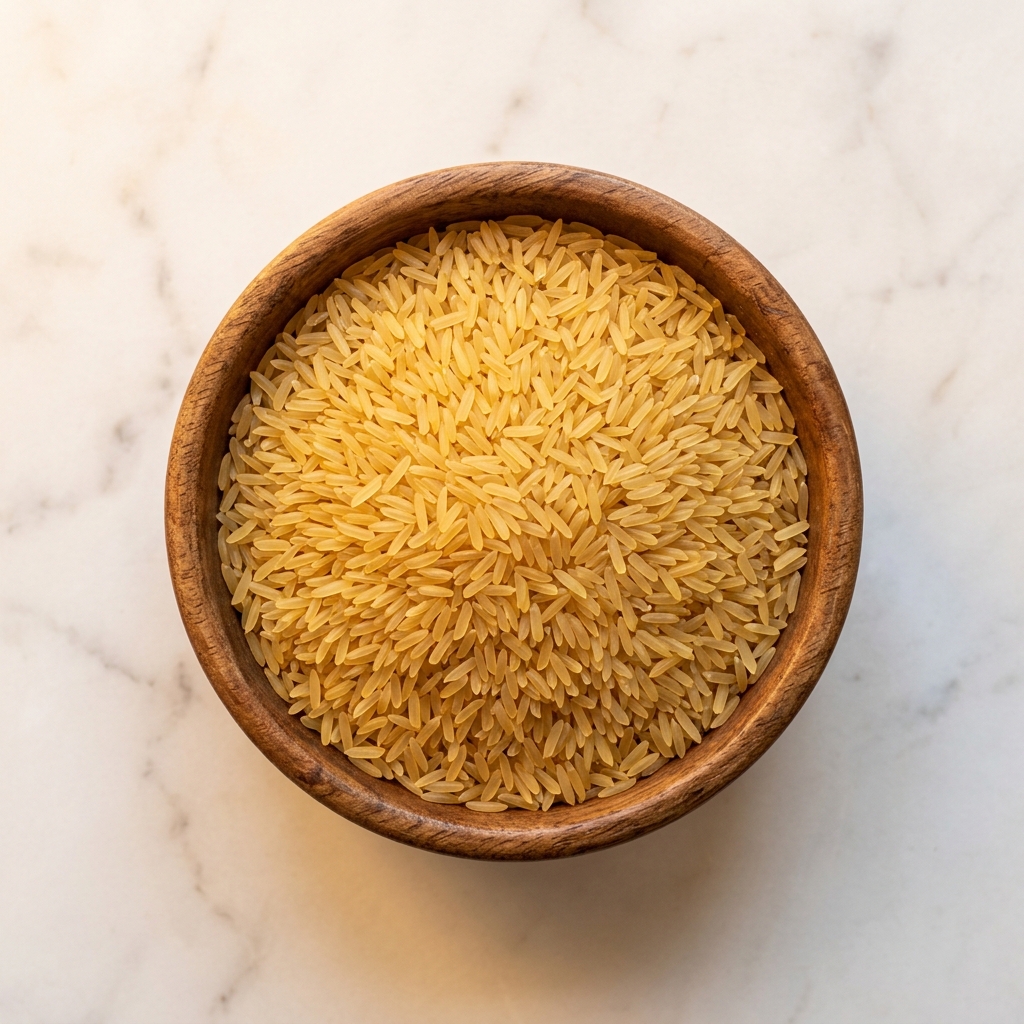
Sella (parboiled) rice is soaked, partially boiled, and dried before milling, giving it a golden color and firmer texture. Steam rice is lightly steamed before milling, resulting in a softer texture closer to raw rice. Both methods improve shelf life and grain strength during milling.
Rice Types Chart
| Rice Type | Grain Size | Flavor | Best Uses |
|---|---|---|---|
| Arborio | Medium | Creamy | Risotto, rice pudding |
| Basmati | Long | Nutty, aromatic | Biryani, pilafs, curries |
| Black Rice | Varies | Nutty, earthy | Grain bowls, salads, desserts |
| Bomba | Short | Mild | Paella, Mediterranean |
| Brown Rice | Long | Nutty, earthy | Bowls, casseroles, stir-fries |
| Jasmine | Long | Floral, aromatic | Thai curries, stir-fries |
| Parboiled | Varies | Mildly nutty | Pilafs, stuffing, bowls |
| Sticky Rice | Long | Mild, sweet | Dumplings, desserts |
| Sushi Rice | Short | Mild | Sushi, poke bowls |
| Wild Rice | Long | Earthy, nutty | Soups, stuffings, salads |
The Bottom Line
From the fluffy, elongated strands of premium Basmati to the antioxidant-rich depths of black rice, this grain is incredibly diverse. Whether you are sourcing rice for a global export business, managing a restaurant kitchen, or simply elevating your Sunday dinner, understanding these differences allows you to respect the ingredient and maximize its potential on the plate.
At Surya Foods, we specialize in premium Indian Basmati and Non-Basmati rice varieties — milled, sorted, and exported to 25+ countries worldwide. Explore our complete product catalog or request a free quote.