
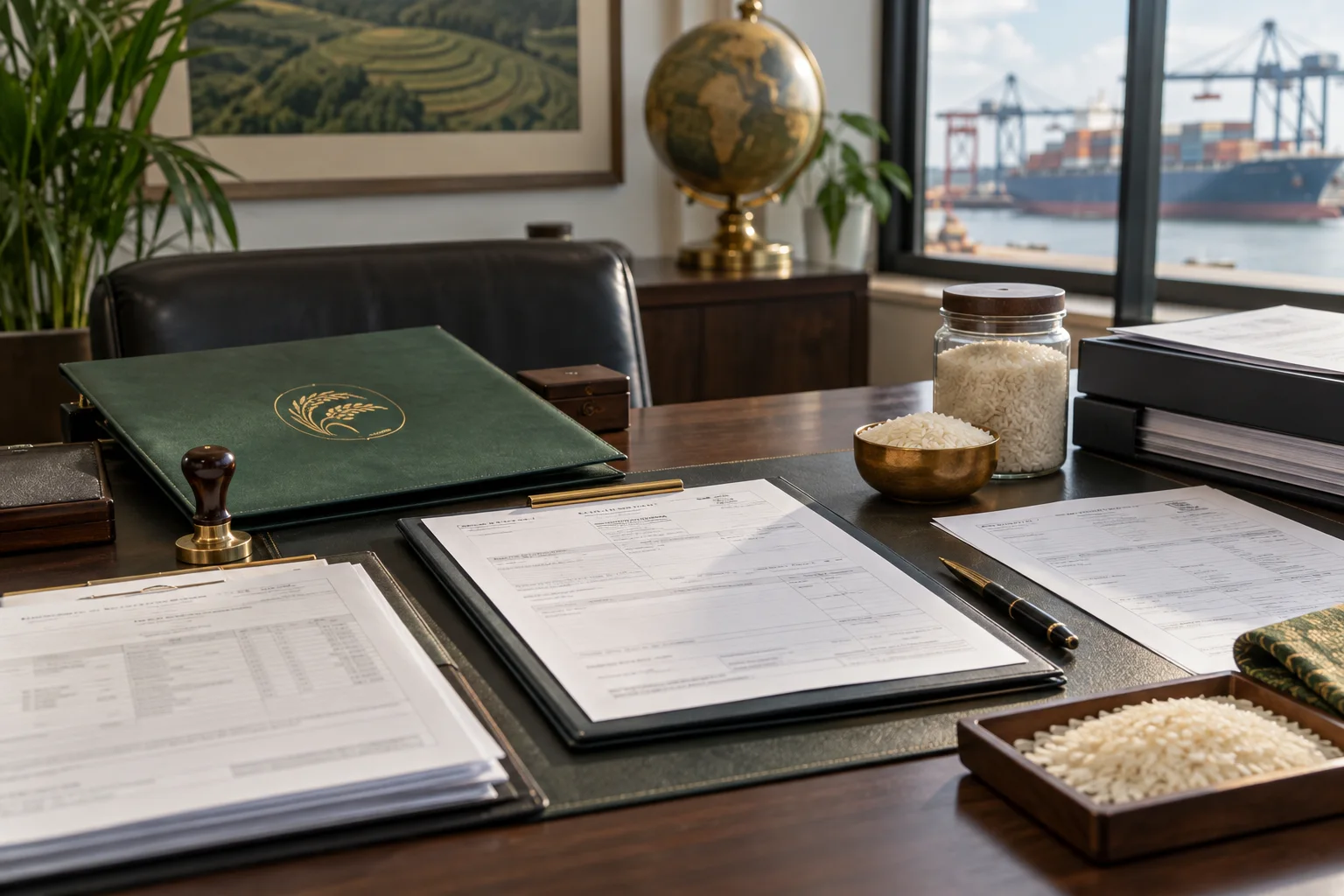
Rice Export Documents from India: A Buyer-Friendly Checklist
Understand the main commercial, transport, origin, inspection and food-safety documents used in rice exports from India.
A document set tells customs, banks, carriers and buyers what was shipped, where it came from and whether it meets agreed conditions. Missing or inconsistent details can delay clearance even when the rice itself is good.
The exact list changes by destination, payment method and product. Use this as a planning checklist, not legal advice.
Quick answer
Core Indian export documents include the transport document, commercial invoice with packing details and shipping bill. Rice shipments may also need origin, phytosanitary, fumigation, inspection or test certificates.
Key points at a glance
- Names and quantities must match across documents.
- Product description should match the contract.
- Destination rules determine extra certificates.
- Review drafts before vessel departure.
Core commercial documents
The commercial invoice states seller, buyer, product, value and terms. The packing list explains bag count, net and gross weight and marks. DGFT lists the commercial invoice-cum-packing list among mandatory export documents.
Transport and customs records
A bill of lading or other transport receipt connects the cargo with the carrier. The shipping bill records the export declaration. Container and seal numbers should be consistent wherever required.
Product and destination certificates
Depending on the market, buyers may request certificate of origin, phytosanitary certificate, fumigation certificate, inspection certificate, health certificate, lab report or Basmati-related registration. Confirm current wording and issuer before production.
Prevent document discrepancies
Create a master shipment sheet and copy approved details from it. Check spelling, addresses, HS code, variety, form, bag count, weights, dates, vessel, ports and Incoterm. A second-person review before originals are issued saves expensive amendments.
A simple decision checklist
- Obtain buyer’s final document list.
- Confirm issuing authorities.
- Prepare drafts early.
- Cross-check every quantity and name.
- Send copies before arrival.
Frequently asked questions
Is a packing list always separate?
DGFT notes that a commercial invoice-cum-packing list may be used, while separate documents are also accepted.
Do all countries need the same certificates?
No. Destination and product rules determine additional documents.
Who should approve drafts?
The buyer, exporter, broker and bank should review the documents relevant to their roles.
Final takeaway
Good documentation is quality control for information. Build one accurate data set and make every shipment document agree with it.
For a quotation, sample or specification discussion, review Surya Foods products, our quality-control process, and global export support, then contact our team.