
How We Ensure Quality: From ISO 22000 to Your Table
An inside look at Surya Foods' quality assurance processes — from ISO 22000 certification to in-house testing labs, and why our partners trust every shipment.
How We Ensure Quality: From ISO 22000 to Your Table
In the global rice trade, quality isn’t just a selling point — it’s everything. A single substandard shipment can damage a business relationship that took years to build. At Surya Foods, we’ve spent over two decades building systems that ensure every grain meets our exacting standards, every time.
Here’s an inside look at how we do it.
Our Quality Philosophy
Our approach to quality rests on three principles:
- Prevention over detection — We design our processes to prevent defects, not just catch them
- Full traceability — Every bag can be traced back to the specific lot, processing line, and quality report
- Continuous improvement — We treat every quality incident as a learning opportunity
The Certifications Behind Our Promise
ISO 22000:2018
ISO 22000 is the international standard for food safety management systems. It integrates the principles of HACCP (Hazard Analysis and Critical Control Points) with prerequisite programs and management system elements.
What this means in practice:
- Hazard analysis at every stage from raw material intake to finished product dispatch
- Critical control points identified and monitored in real-time
- Corrective actions documented and executed immediately when deviations occur
- Regular internal and external audits to verify system effectiveness
FSSAI License
The Food Safety and Standards Authority of India (FSSAI) license is mandatory for all food businesses in India. Our compliance goes beyond the minimum requirements — we maintain the highest tier of FSSAI registration, reflecting the scale and sophistication of our operations.
HACCP Compliance
HACCP is a systematic preventive approach to food safety. Our HACCP plan identifies biological, chemical, and physical hazards at every stage of production and establishes critical limits for each.
Inside Our Quality Lab
Our in-house quality laboratory is the nerve center of our quality assurance system. Every batch of rice undergoes comprehensive testing before it’s approved for packaging and shipment.
Tests We Perform
| Test | What It Measures | Acceptable Range |
|---|---|---|
| Grain Length | Raw and cooked grain dimensions | Variety-specific |
| Moisture Content | Water content percentage | < 13% |
| Broken Percentage | Proportion of broken grains | < 2% (export grade) |
| Foreign Matter | Non-rice particles | < 0.1% |
| Aroma Index | 2-acetyl-1-pyrroline concentration | Variety-specific minimum |
| Whiteness | Color consistency | Digital colorimetry standard |
| Cooking Test | Elongation ratio and texture | Variety-specific |
| Chalkiness | Opaque grain percentage | < 5% |
Equipment
- Digital grain length analyzers
- Precision moisture meters
- Color sorting verification systems
- Gas chromatography for aroma analysis
- Standardized cooking stations
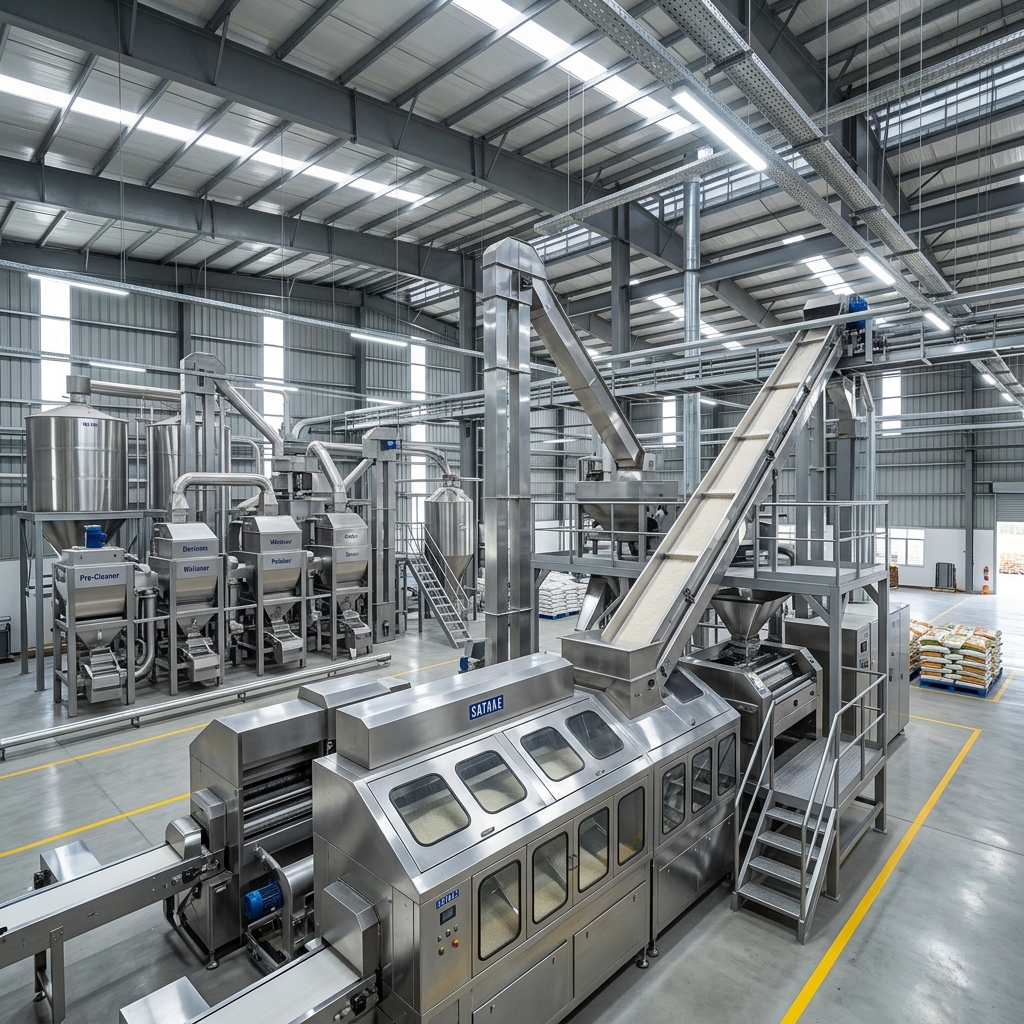
The Production Line: Quality at Every Step
Step 1: Raw Material Inspection
Every lot of paddy entering our facility is inspected for moisture content, foreign matter, and grain quality. Lots that don’t meet our intake standards are rejected — no exceptions.
Step 2: Cleaning & De-stoning
Paddy passes through multiple cleaning stages including vibrating sieves, de-stoners, and magnetic separators. This removes stones, dust, weed seeds, and metal particles.
Step 3: Husking & Milling
Rubber roll huskers remove the outer husk, followed by multi-stage whitening and polishing. Our milling equipment is calibrated daily to ensure consistent grain quality.
Step 4: Color Sorting
State-of-the-art optical color sorters scan every grain at high speed, ejecting discolored, damaged, or foreign grains with pinpoint accuracy. We run rice through multiple passes to achieve near-perfect purity.
Step 5: Grading & Length Sorting
Precision grading machines separate grains by length, ensuring that export-grade bags contain only full-length grains with minimal broken percentage.
Step 6: Final Quality Check
Samples from every batch go to our quality lab for comprehensive testing. Only batches that pass all parameters are approved for packaging.
Step 7: Packaging & Storage
Rice is packaged in food-grade materials appropriate for the destination market. Finished goods are stored in climate-controlled warehouses until shipment.
Traceability: From Field to Fork
Every bag of Surya Foods rice carries a lot number that enables full traceability:
- Paddy source — Which region and which procurement lot
- Processing date — When the rice was milled and processed
- Quality report — Complete lab results for the batch
- Packaging date — When it was packed and by which team
- Shipment details — Container number, destination, and logistics partner
This level of traceability gives our partners confidence and makes regulatory compliance effortless.
Why Partners Trust Us
In 25+ years of operations, we’ve built our reputation on consistency. Our partners know that:
- Every shipment meets the agreed specifications
- Quality reports are accurate and verifiable
- Issues are addressed immediately and transparently
- Our processes are audited and certified by independent bodies
Quality isn’t a department at Surya Foods — it’s a culture that permeates every level of our organization.
Want to see our quality standards in action? Request a facility tour or product samples — we’d be happy to show you around.