
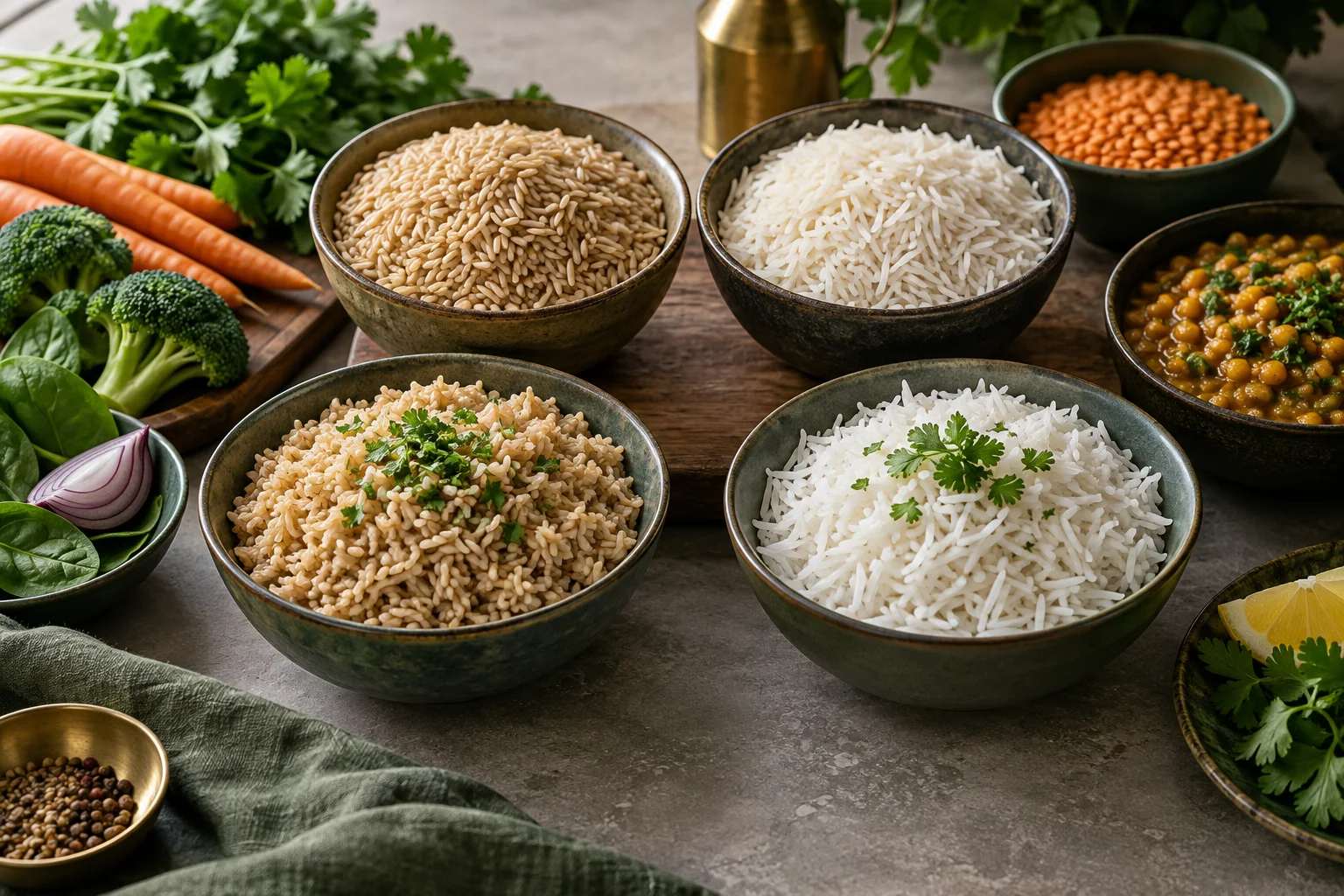
Brown vs White Basmati Rice: Nutrition, Taste and Cooking
Compare brown and white Basmati rice by processing, fibre, texture, cooking time, storage and everyday meal use.
Brown Basmati keeps the bran layer, while white Basmati has that layer removed during milling. This changes fibre, texture, cooking time and shelf stability.
Neither choice turns one meal into a complete diet. The best option also depends on taste, digestion, medical needs and what you eat with the rice.
Quick answer
Choose brown Basmati for a chewier whole-grain option with more fibre. Choose white Basmati for a softer texture, faster cooking and classic presentation. Balance either with vegetables and protein.
Key points at a glance
- Brown rice retains bran and germ.
- White rice cooks faster and softer.
- Brown rice usually needs more water and time.
- Individual nutrition needs differ.
How processing differs
Brown Basmati has its husk removed but retains the bran and germ. White Basmati is milled further and polished. That creates a lighter colour and softer bite but removes part of the whole-grain layer.
Nutrition in context
Whole grains such as brown rice can contribute fibre to a varied diet. White rice can also be part of balanced meals. Portion, vegetables, pulses, protein, fats and the overall eating pattern matter more than calling one food universally healthy.
Cooking differences
Brown Basmati normally needs more water, a longer simmer and a longer rest. Soaking can shorten cooking and support even texture. White Basmati is faster and shows more dramatic fluffy separation.
Which should you buy?
Choose brown for whole-grain lines and customers who enjoy a nutty, chewy bite. Choose white for biryani, pulao, quick home meals and classic premium packs. Offer clear instructions so customers get the expected result.
A simple decision checklist
- Consider taste and texture.
- Review cooking time.
- Build a balanced meal.
- Check personal dietary advice.
- Store each form correctly.
Frequently asked questions
Is brown Basmati always better?
It retains more whole-grain components, but the best choice depends on the total diet and personal needs.
Does brown rice take longer?
Usually yes, because the bran layer slows water entry.
Can people with diabetes eat Basmati?
Individual advice should come from a qualified health professional; portion and the complete meal matter.
Final takeaway
Brown and white Basmati serve different needs. Choose the texture you enjoy and place it within a varied, balanced eating pattern.
For a quotation, sample or specification discussion, review Surya Foods products, our quality-control process, and global export support, then contact our team.